Canyoneering · Angeles National Forest
Indian Springs Canyon
Twelve and a half hours, too many thickets of brush, muddy rappels, a mossy waterfall, and a headlamp-lit exit. Indian Springs was worth seeing once.
- 8.3miDistance
- 2,854ftGain
- 12h 29mTime
- Oct 25 2026Date
Overview
- Distance
- 8.3 mi
- Gain
- 2,854 ft
- Time
- 12h 29m
- Date
- Oct 25 2026
- Activity
- Canyoneering
- Photos
- 46
- Where
- Angeles National Forest
7 chapters
Some canyon days are memorable because everything comes together: beautiful scenery, interesting rappels, good company, and an efficient descent.
Indian Springs Canyon was memorable for other reasons.
We knew going in that this wasn't going to be a polished, straightforward canyon. We expected some route-finding, anchor decisions, and a bit of an adventure. What we didn't anticipate was just how much of the day would be spent fighting through vegetation.
By the time we got back to the car, we'd been out for roughly twelve and a half hours. We'd rappelled waterfalls, negotiated slippery drops, pushed through an extraordinary amount of brush, collected a couple of Mylar balloons, and finished the exit in the dark.
I'm glad we went with the people we did. I'm not particularly interested in doing it again.
Mile 1.5
The Approach
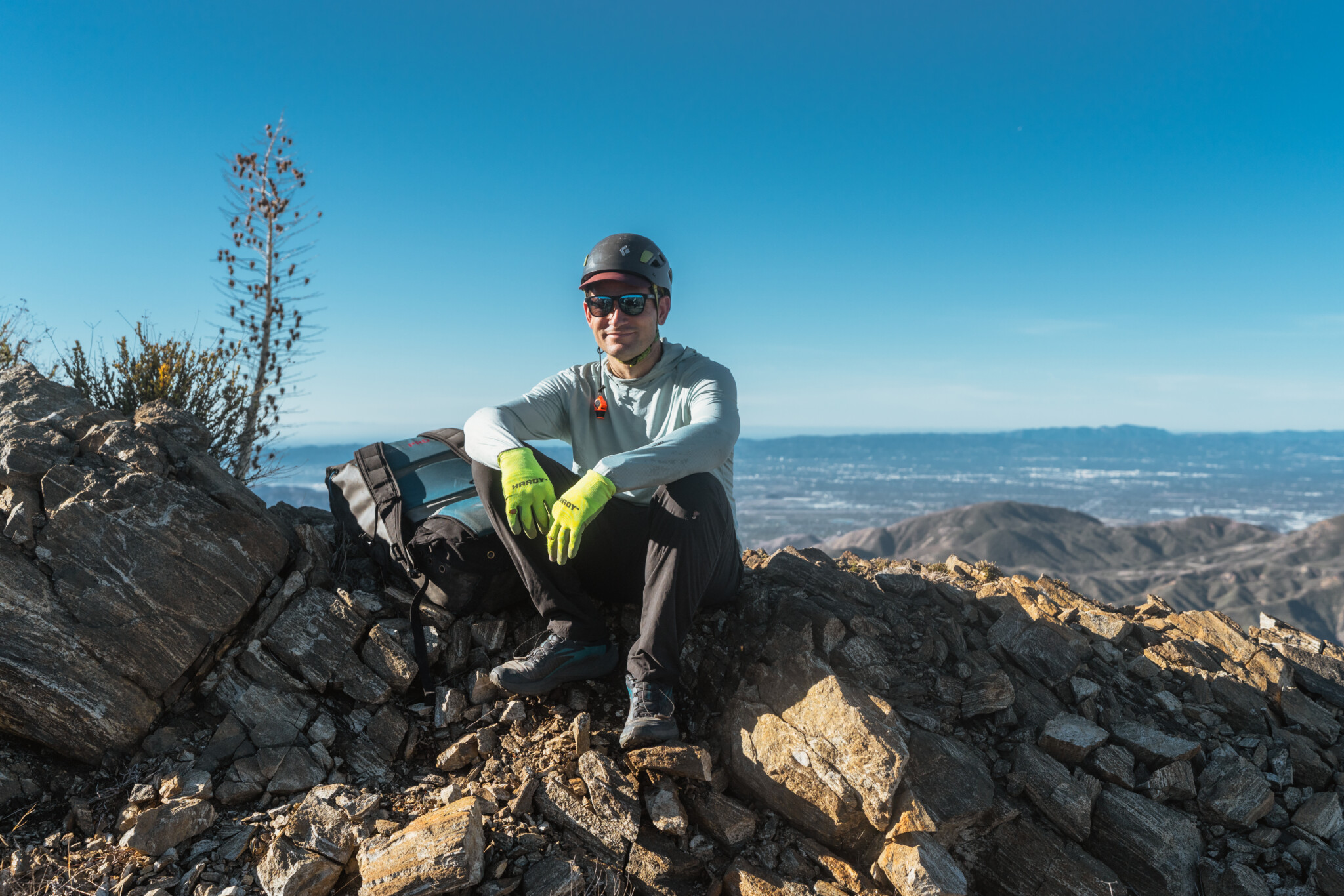
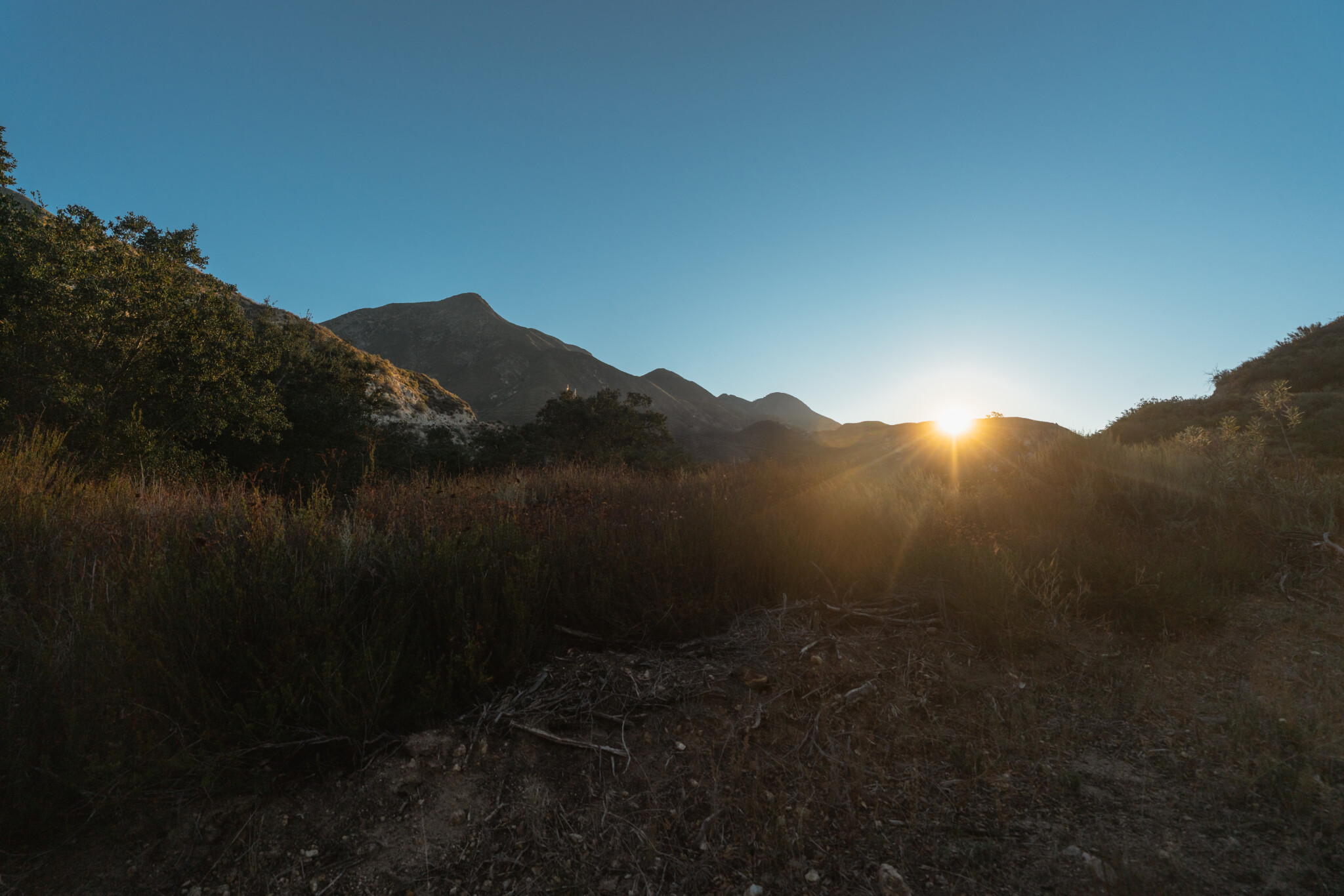
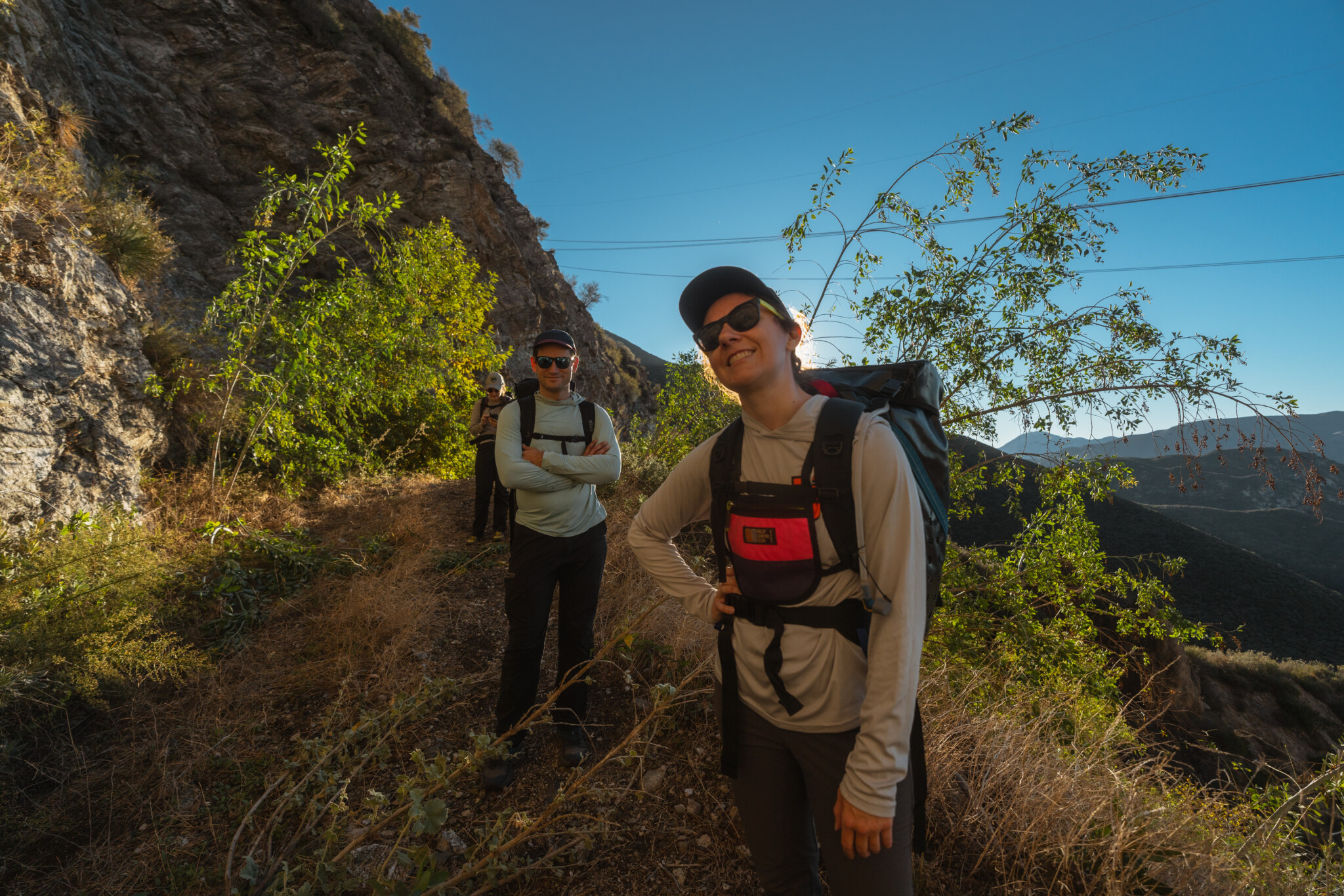
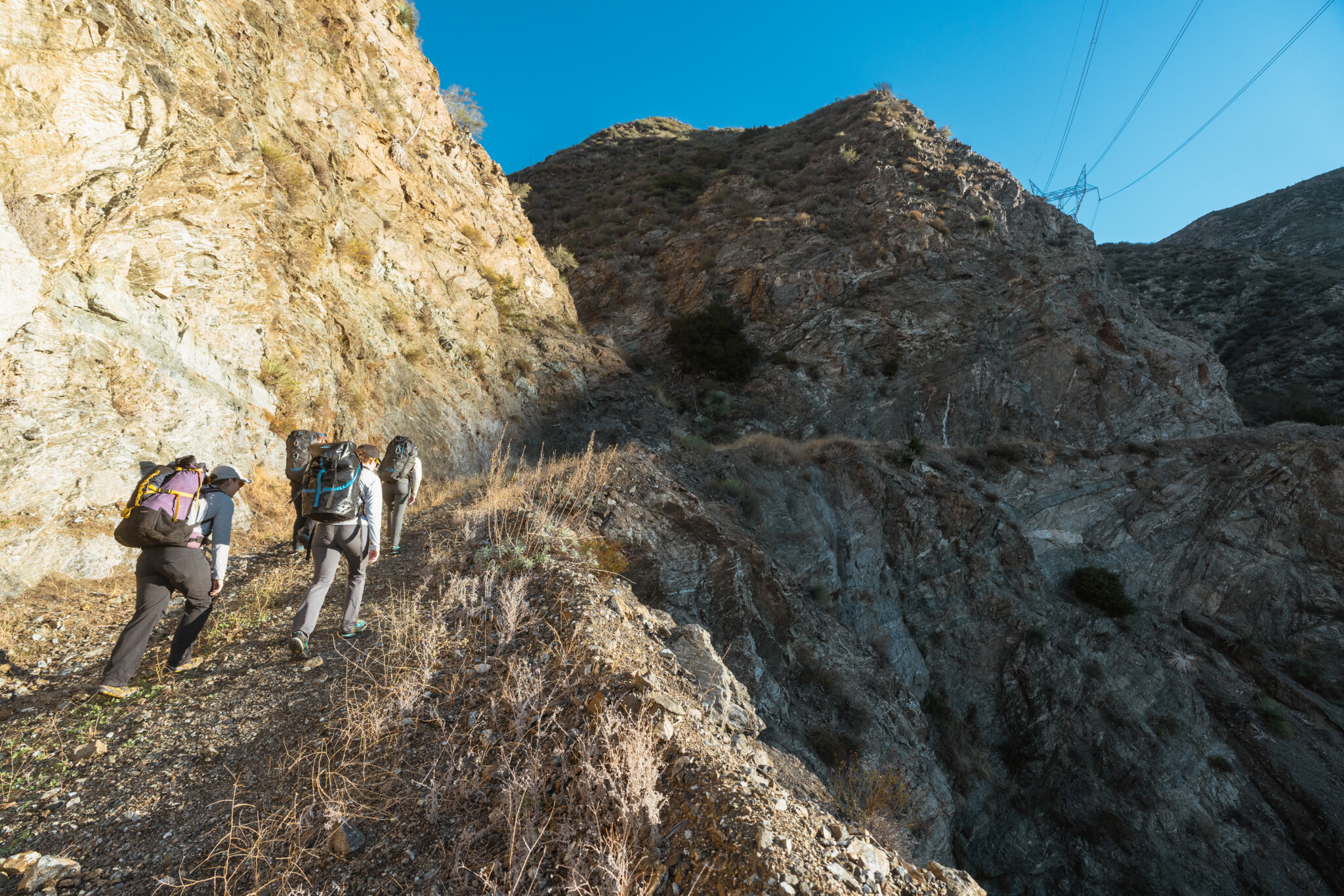
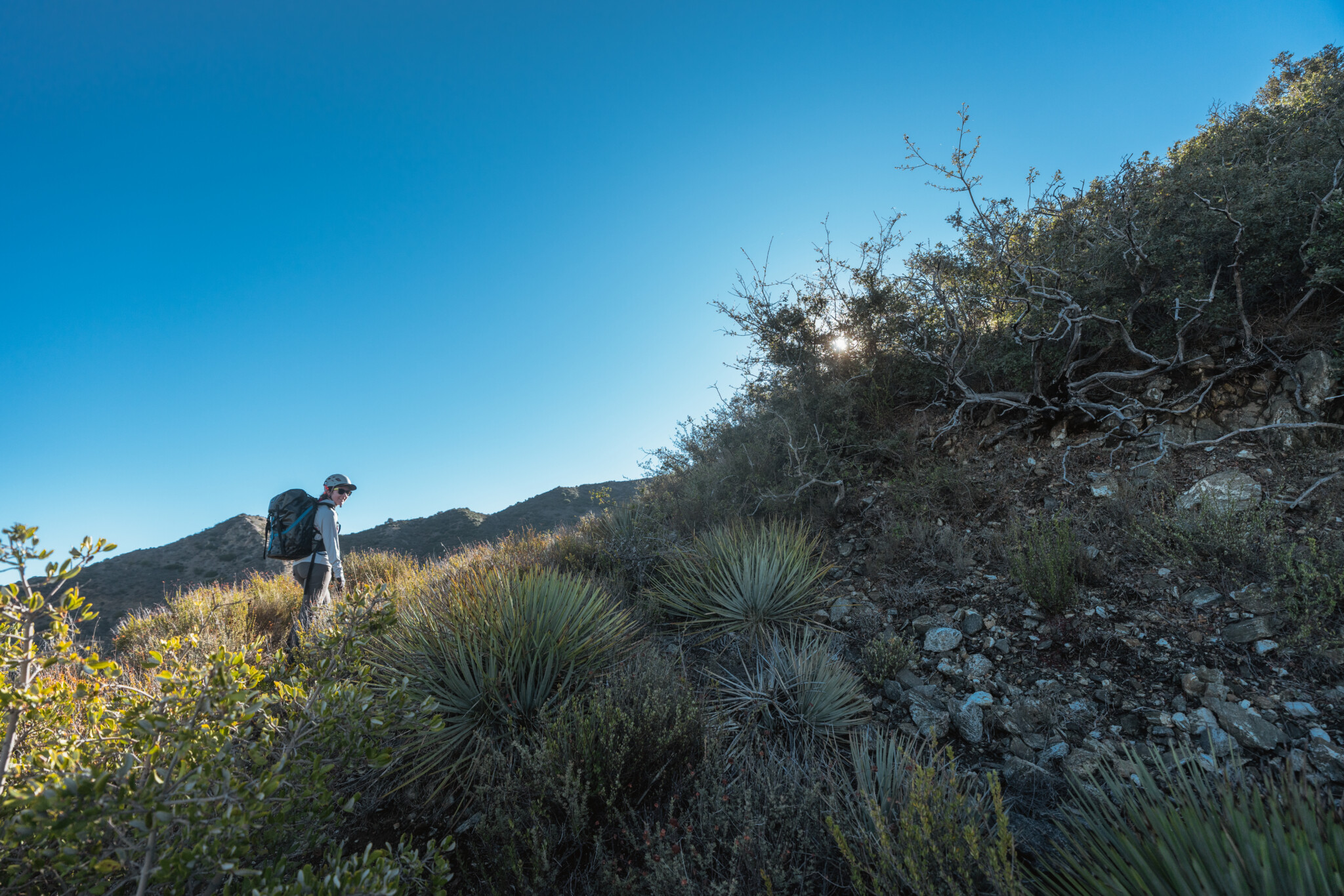
Our group of five started from a small turnout in the Big Tujunga area at about 7:34 in the morning.
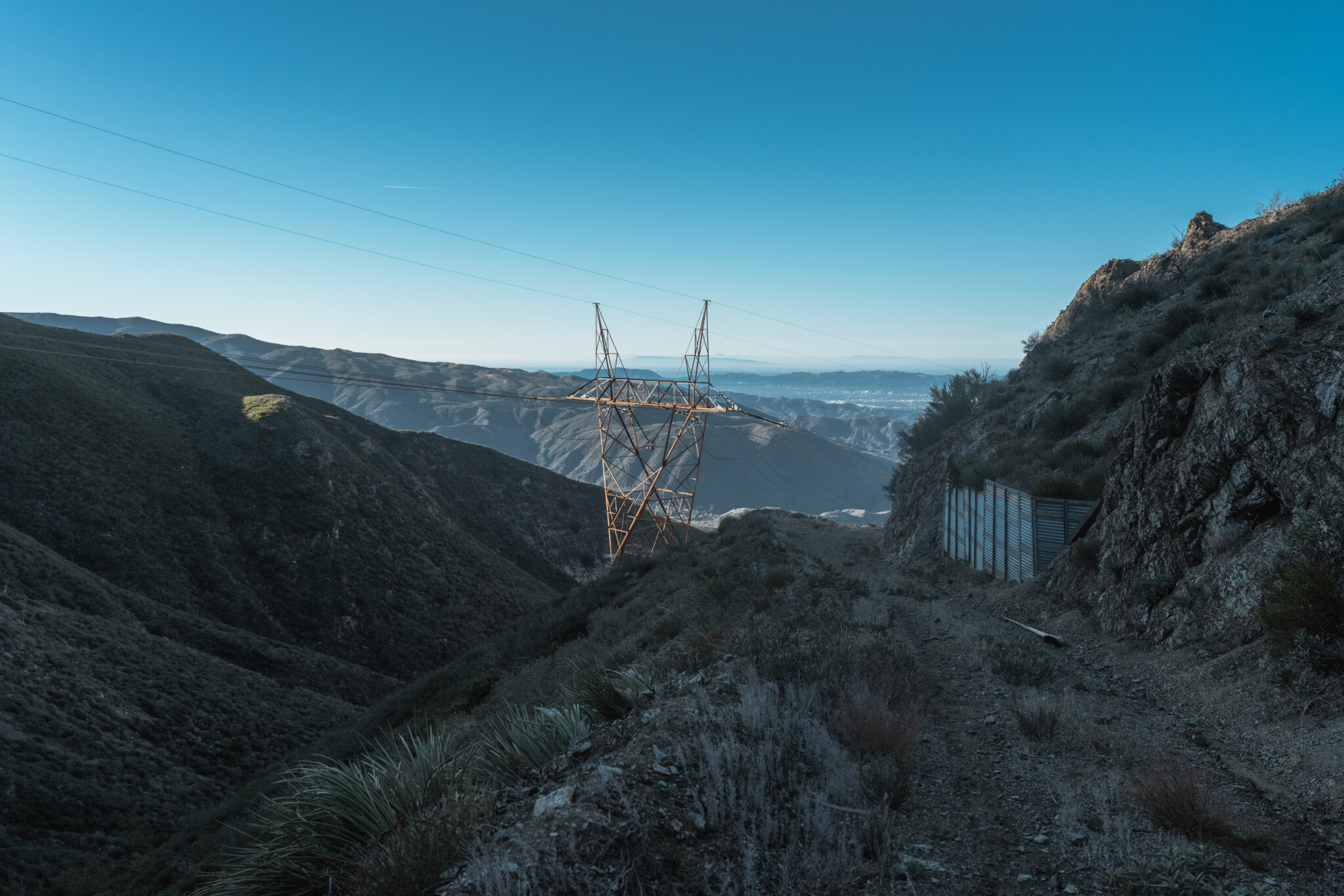
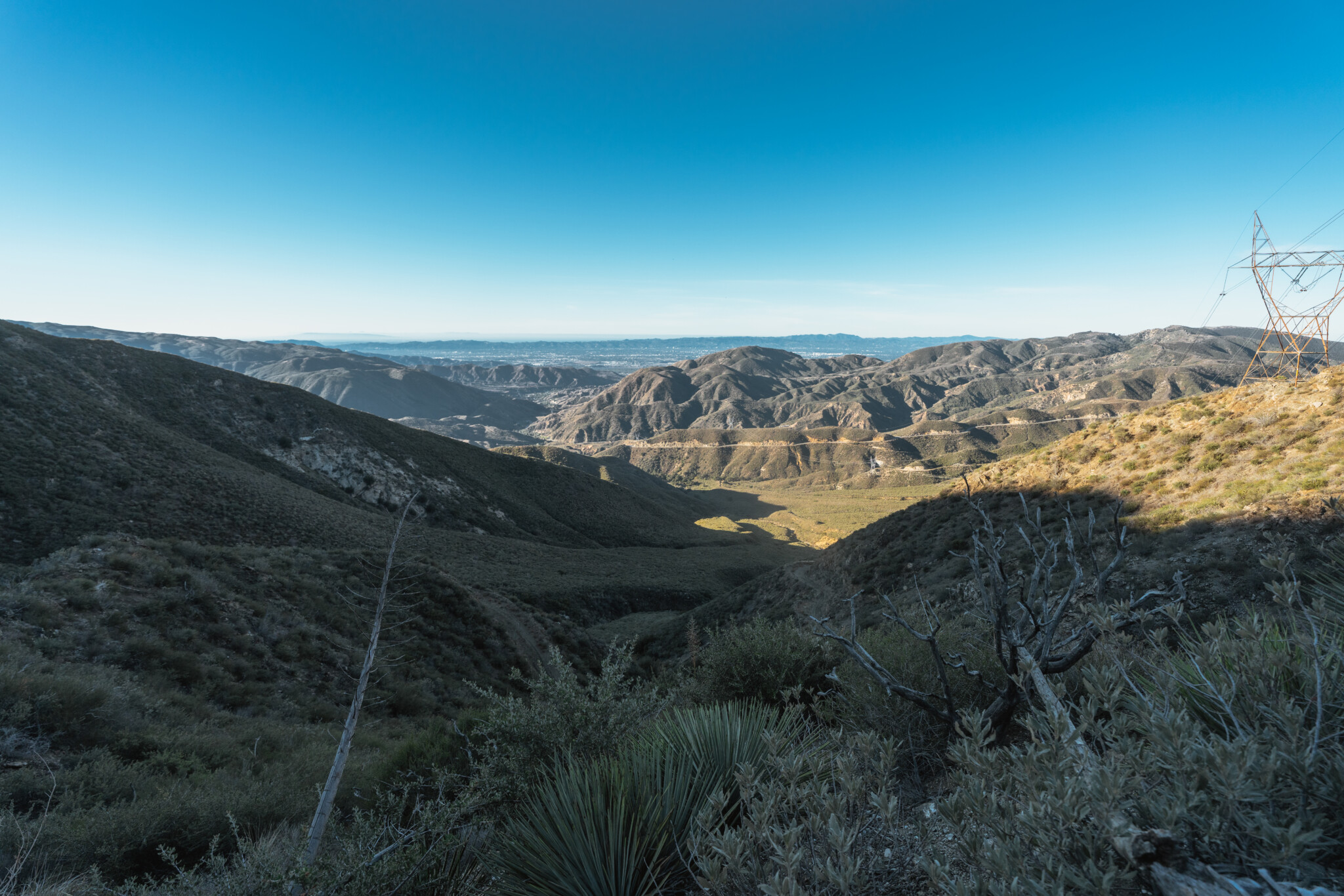
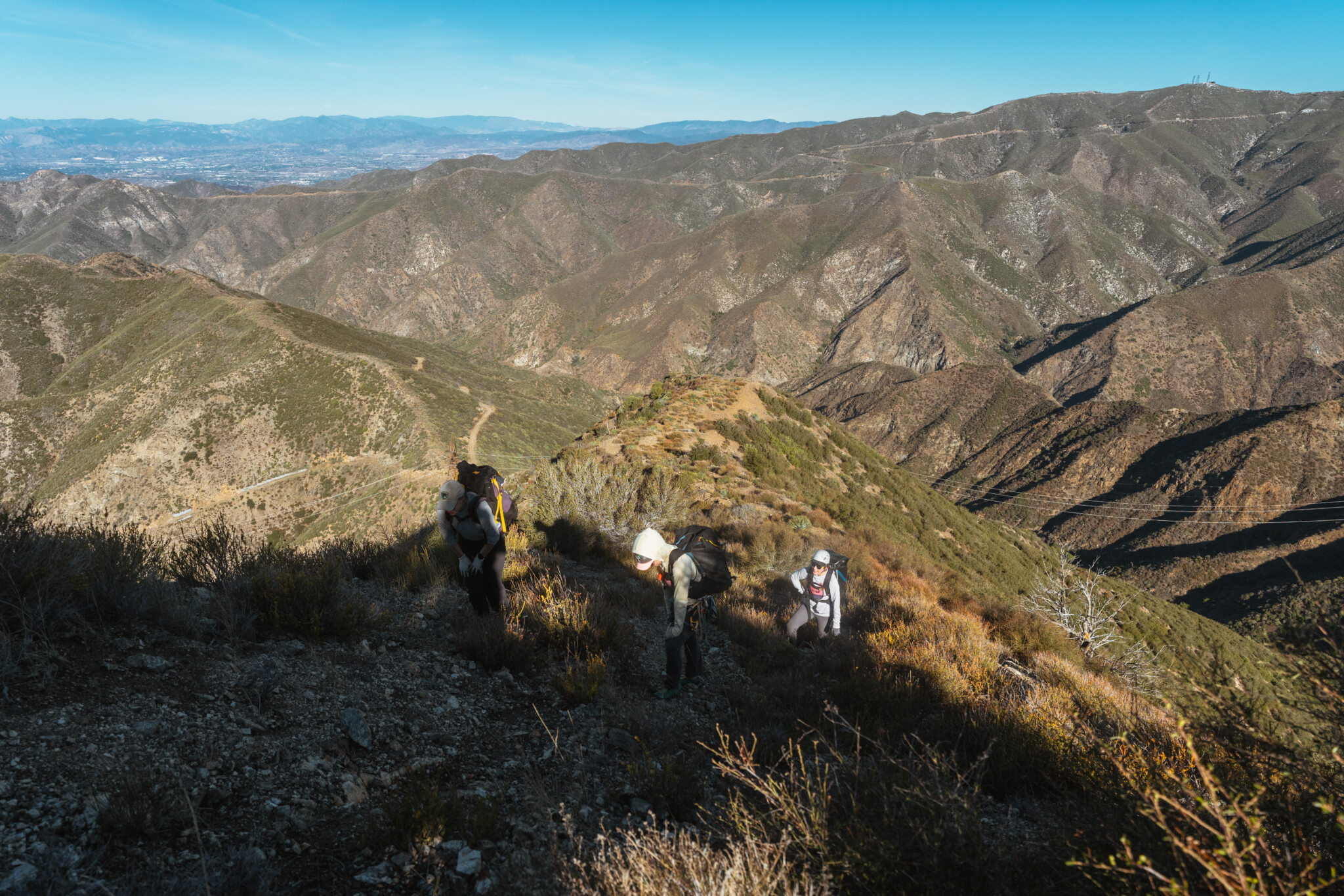
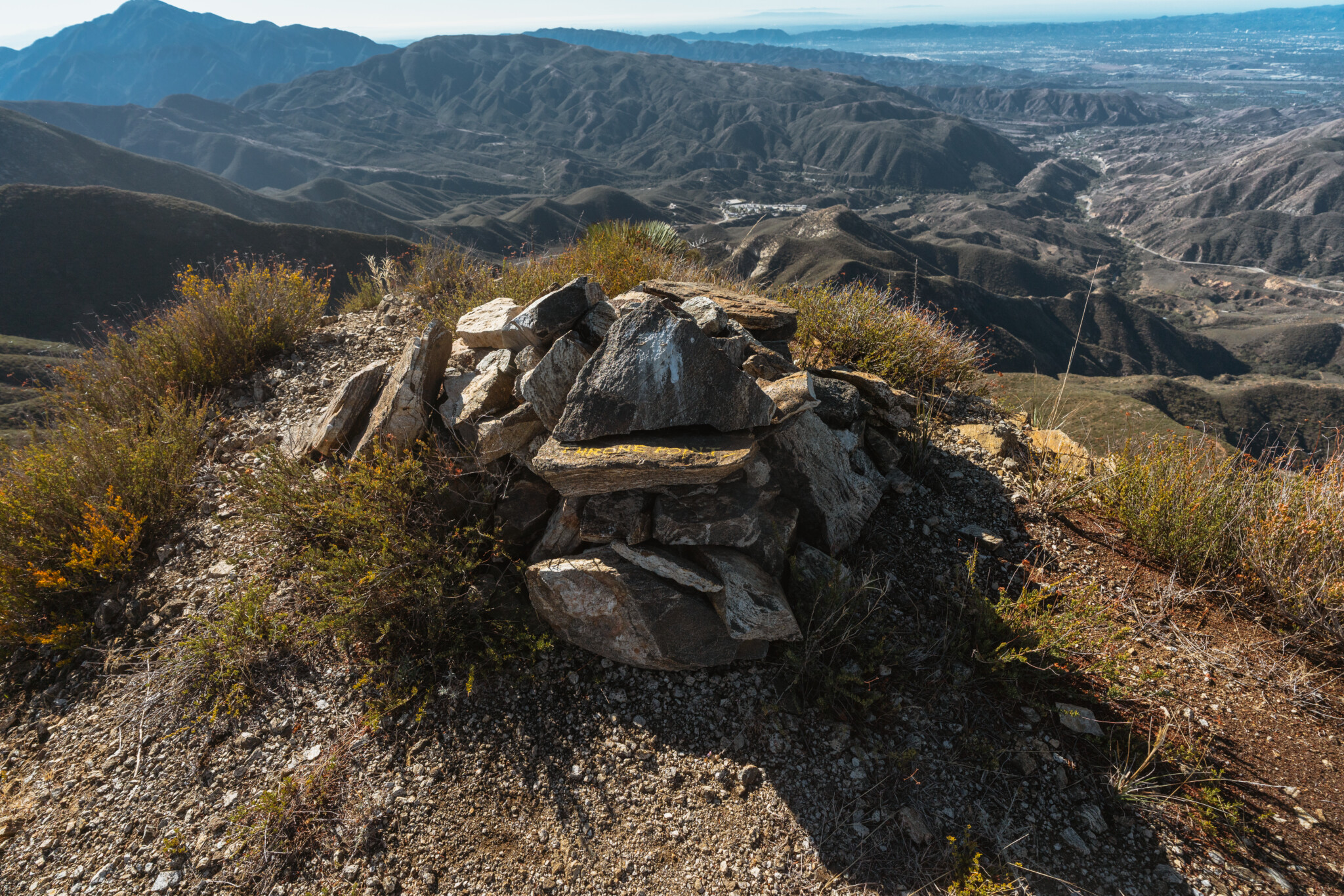
The initial walk along a dirt road was easy enough. From there, we climbed toward a saddle and followed a steeper use trail onto the ridge. A rock stack near the high point helped orient us before we turned toward the canyon.
The approach became less pleasant as we descended.
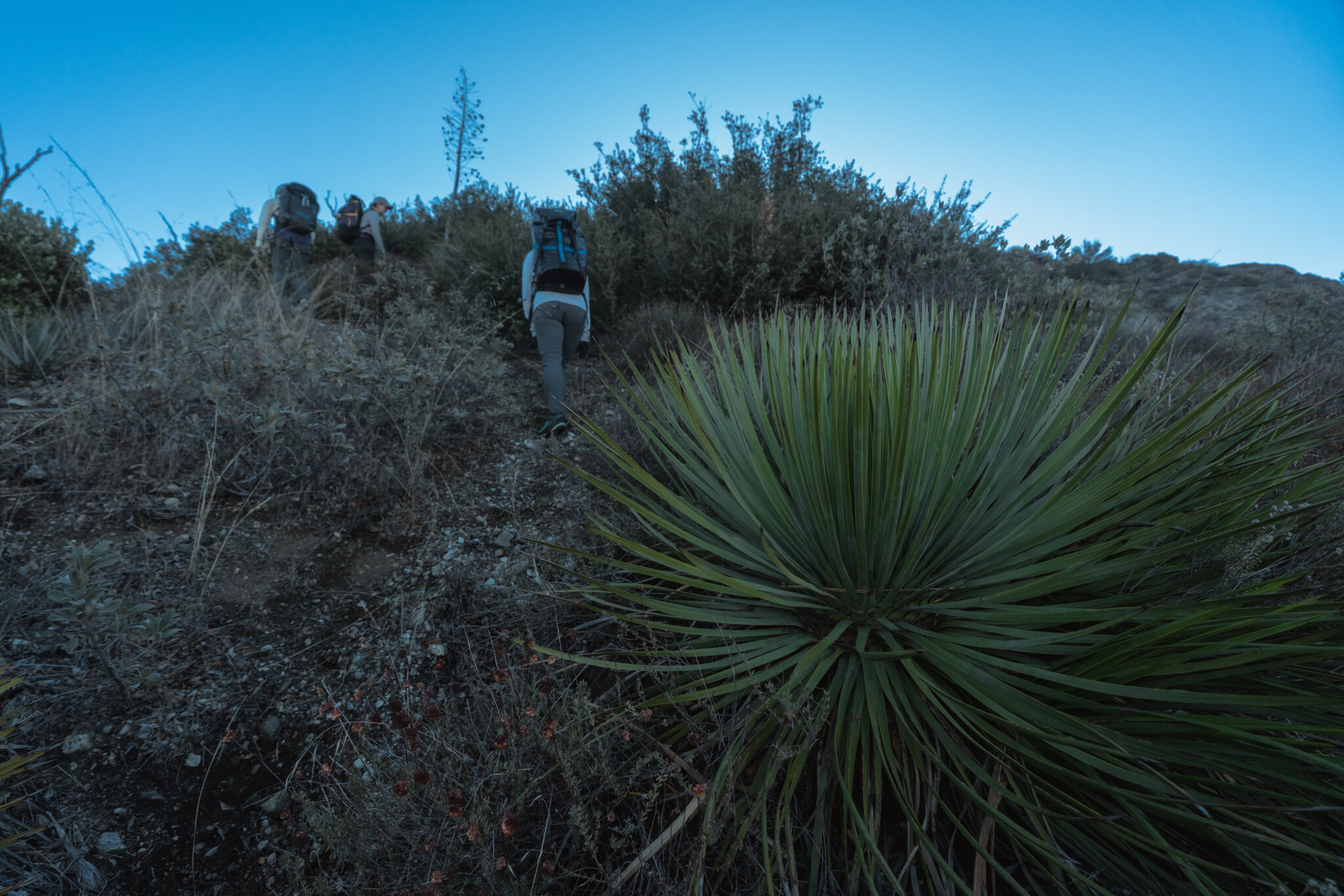
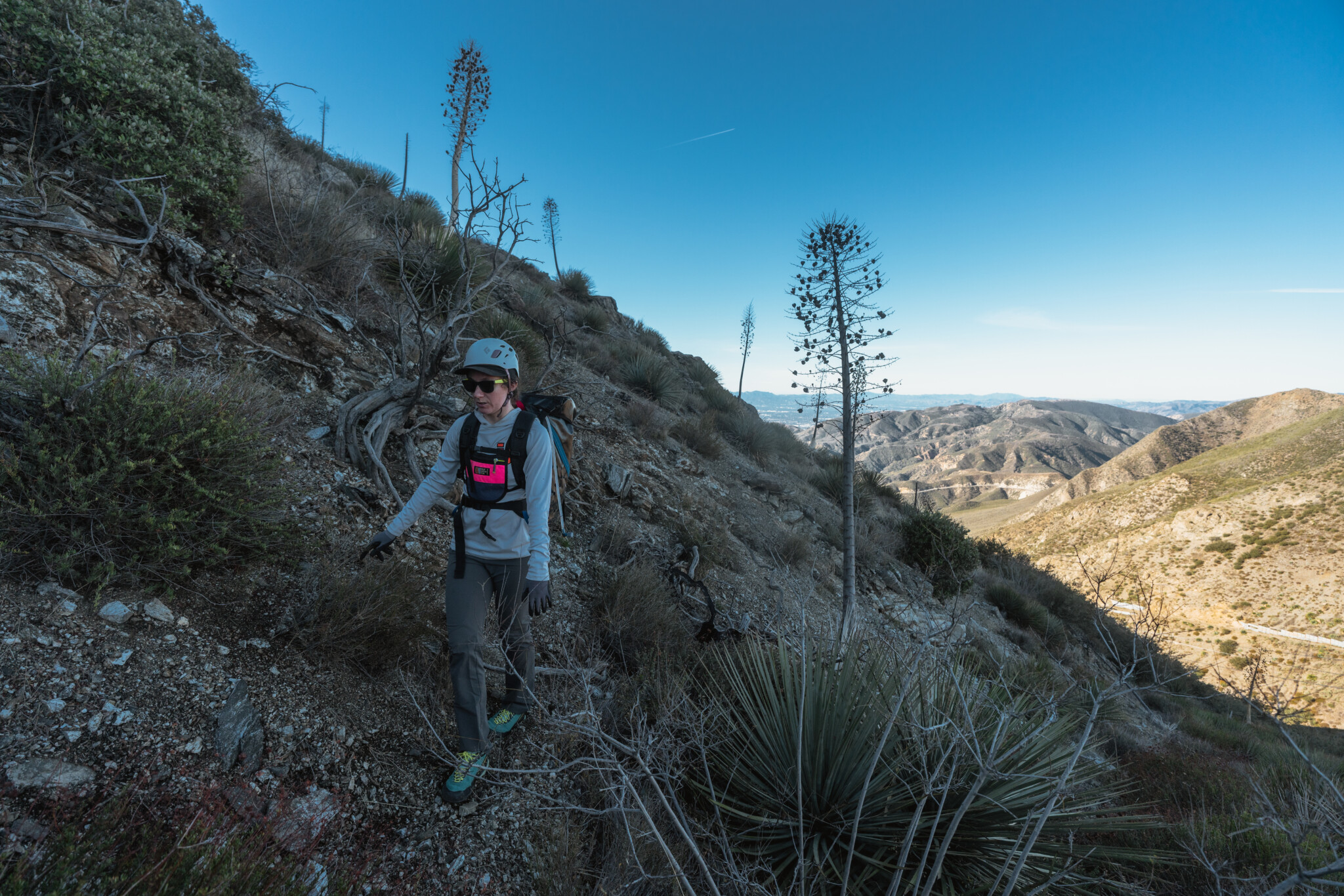
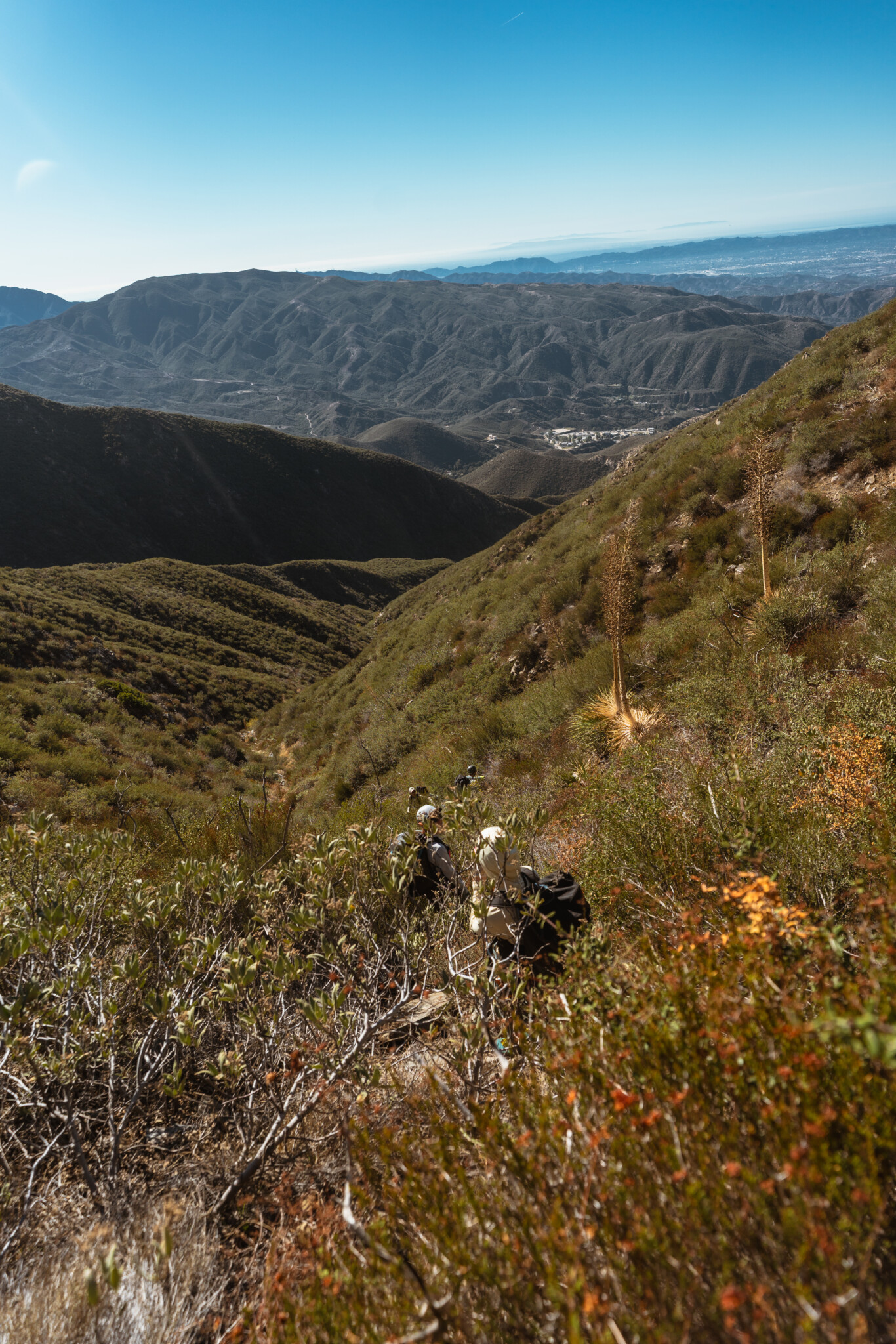
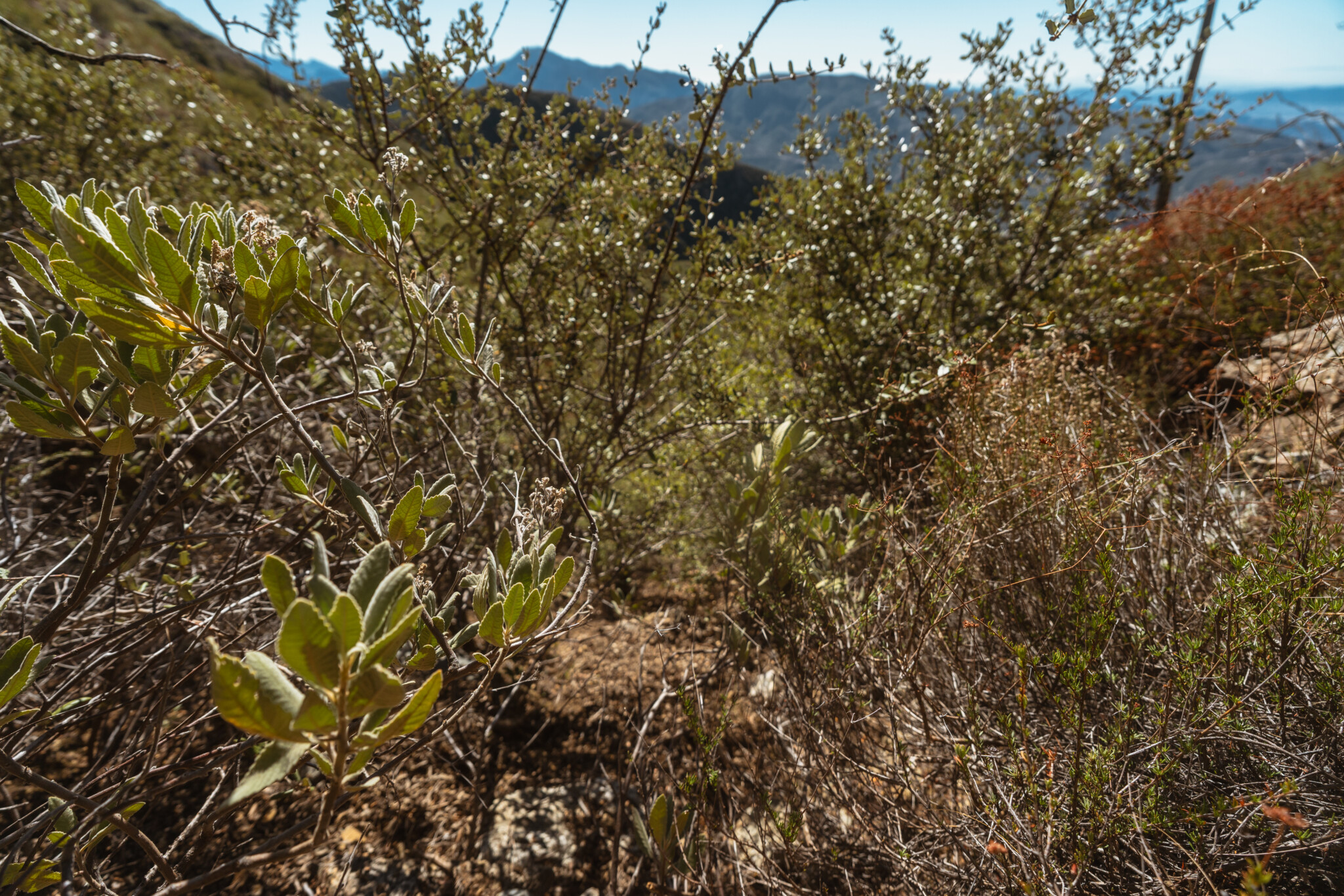
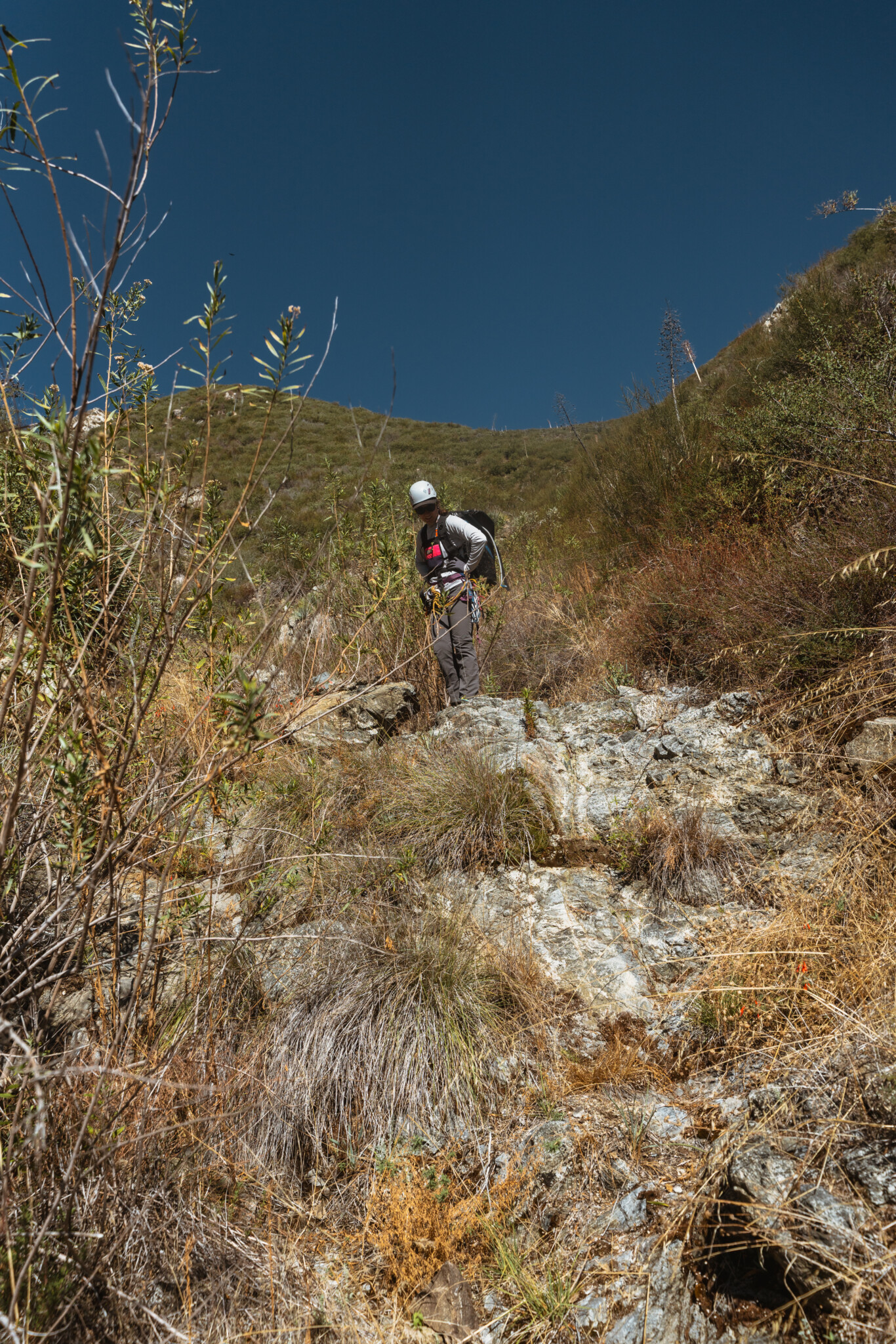
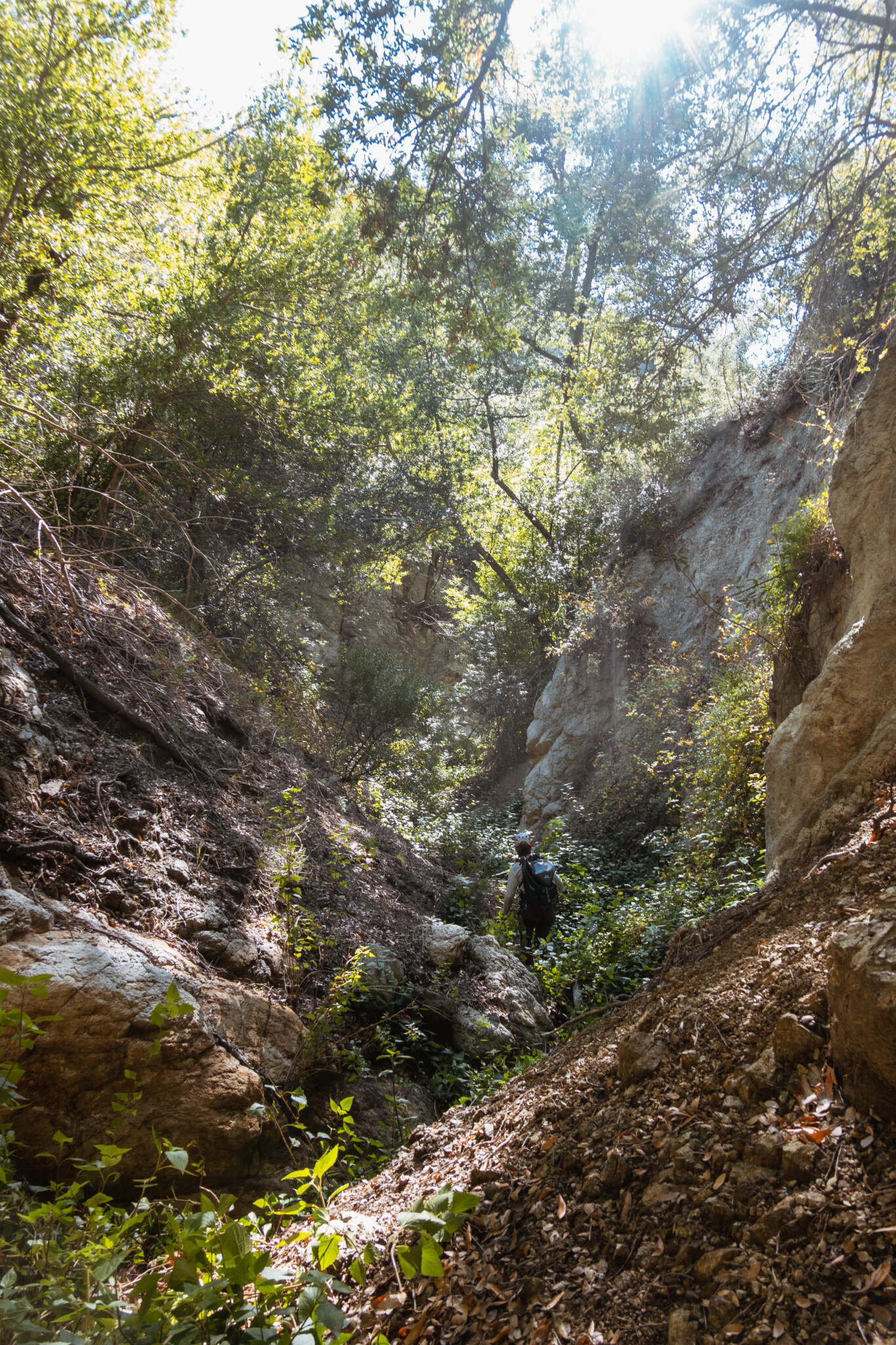
The terrain was loose, and the vegetation was already making itself known. Yucca seemed particularly well positioned to catch anyone who wasn't paying attention. We spread out where appropriate because dislodging rocks onto someone below was a genuine concern.
Finding the best place to drop into the drainage took some interpretation. There wasn't a dramatic, obvious canyon entrance. We worked our way into a shallow erosion channel and began following it downstream.


Mile 3.9
Into the Canyon
The early obstacles were short enough that our group had options.
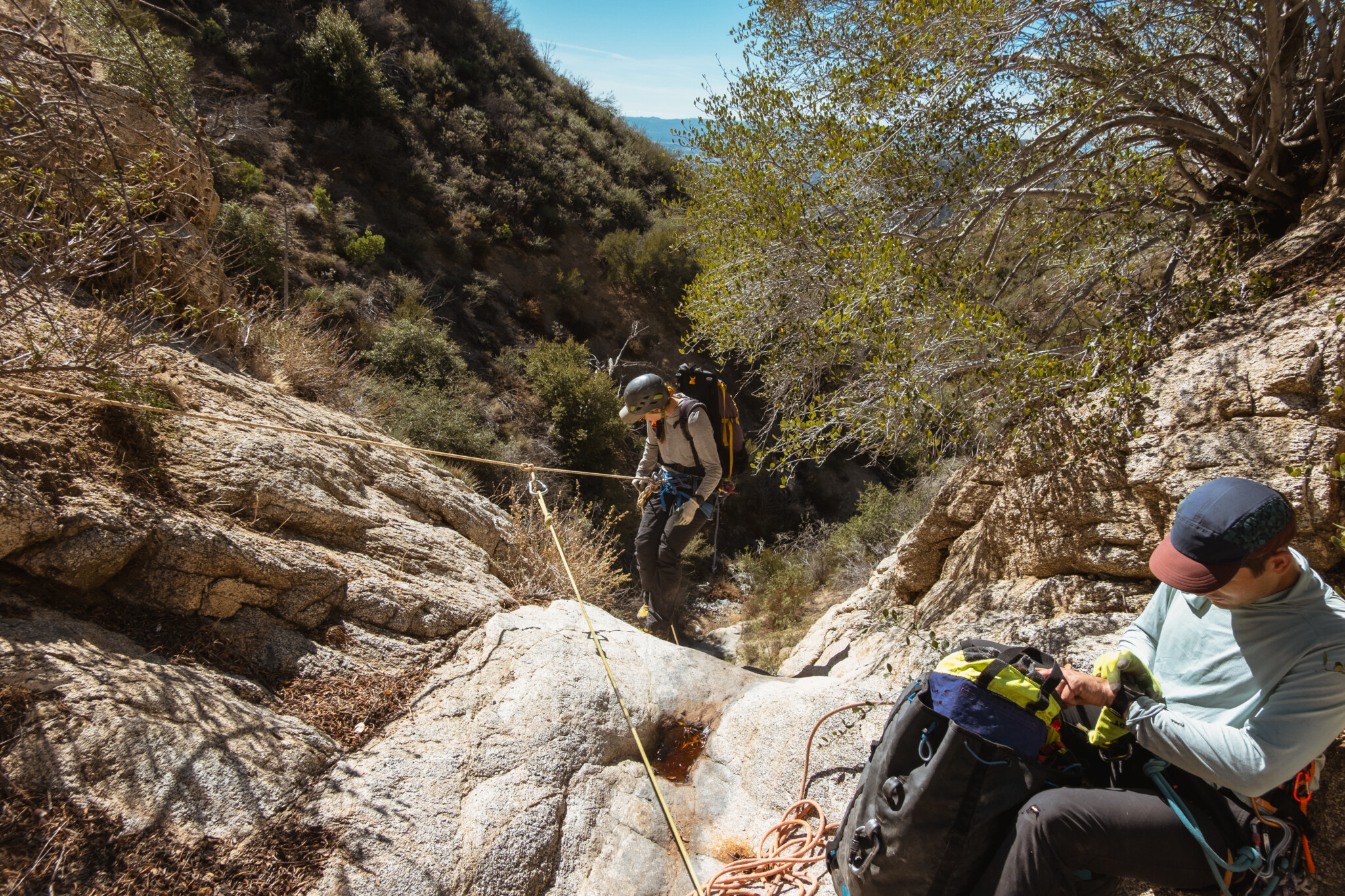
Some drops could be downclimbed or negotiated with partner assistance. Others made more sense as rappels. We used a mixture of techniques depending on the terrain, the people involved, and what anchors were available.
This is one reason I'd be cautious about treating a published rappel count as definitive for Indian Springs. What one group rappels, another may downclimb. We also encountered places where the obstacles didn't seem to line up neatly with the descriptions we'd read.
But the technical obstacles weren't what slowed us down most.
It was the brush.
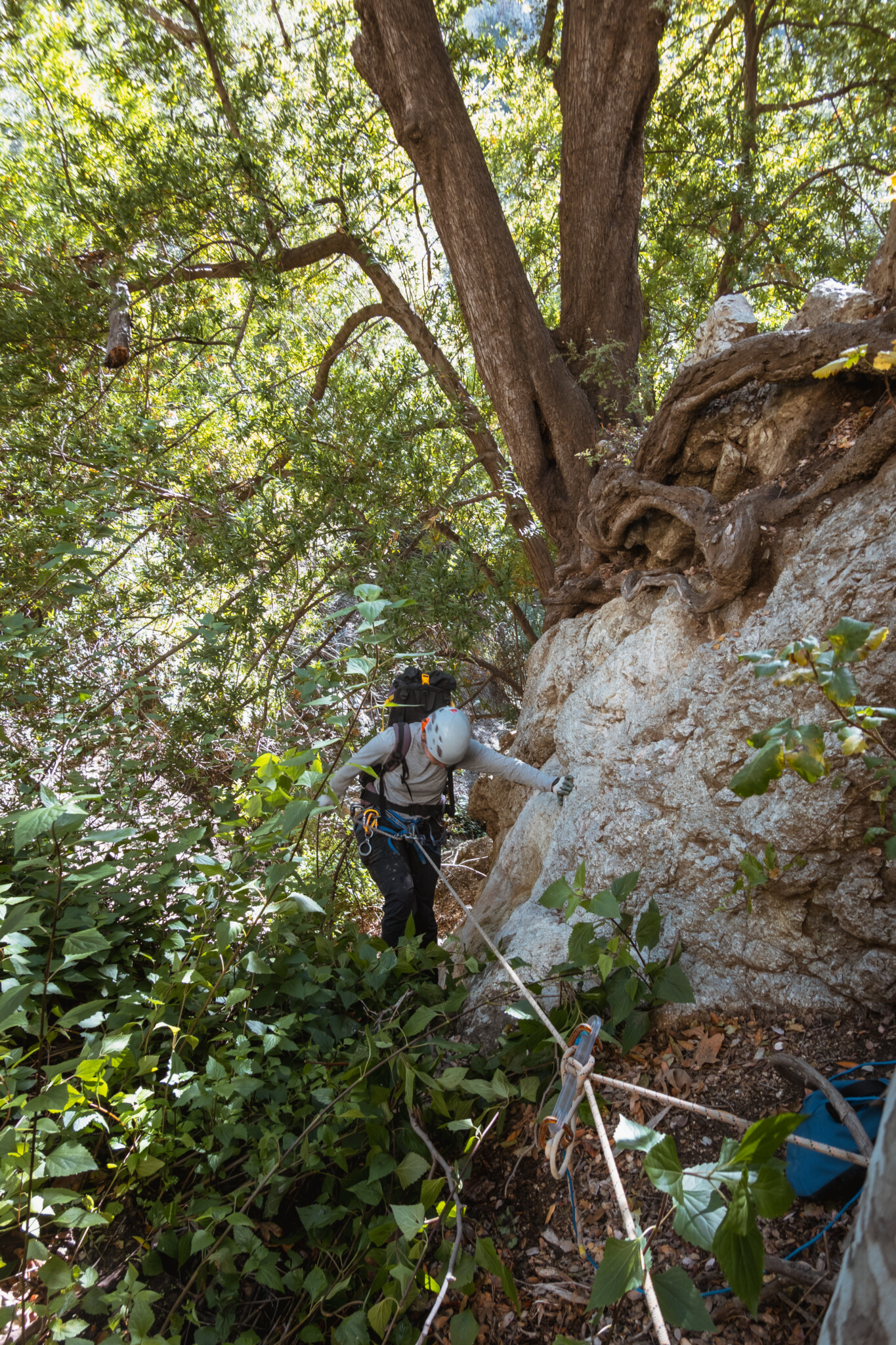
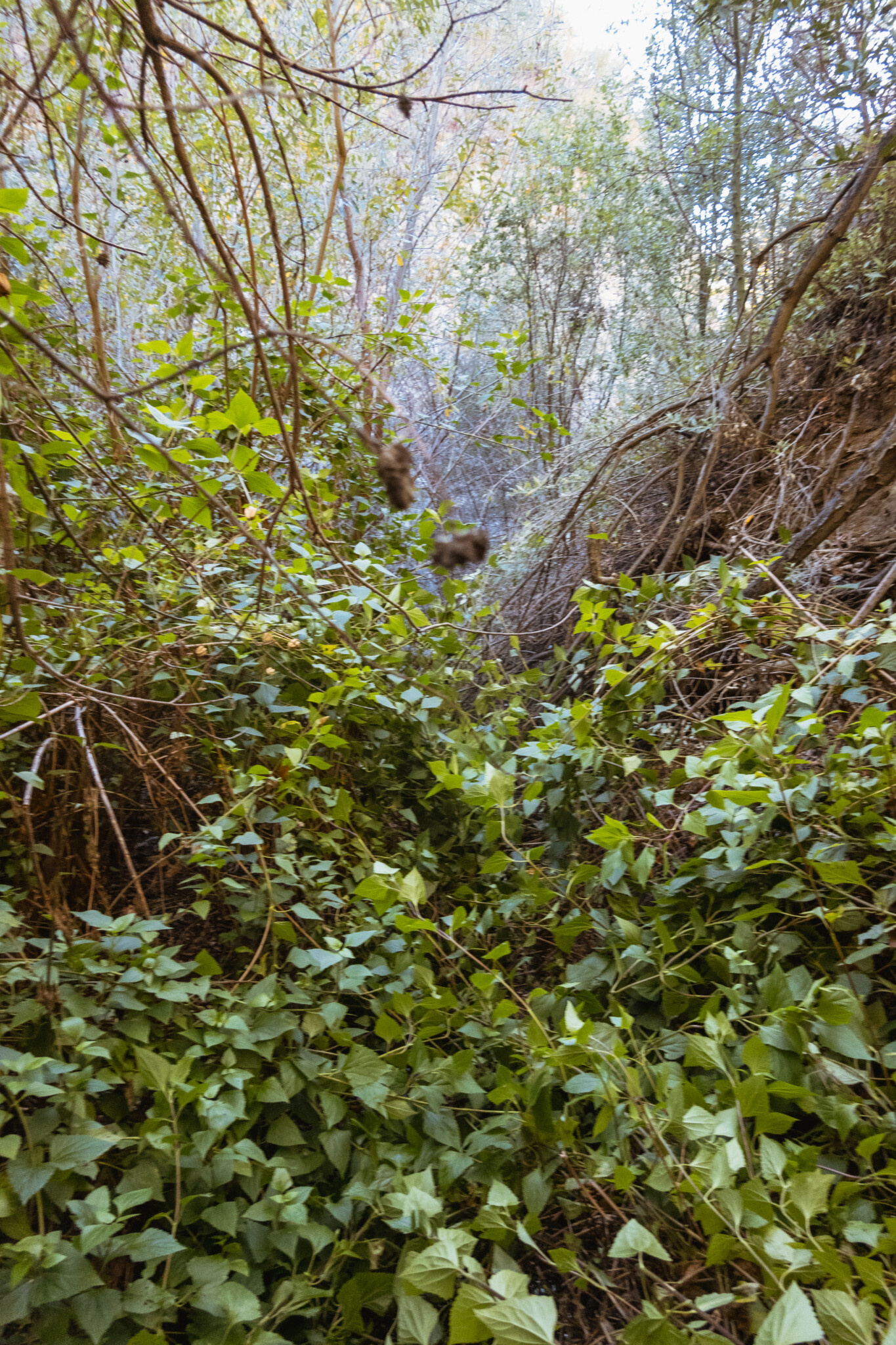
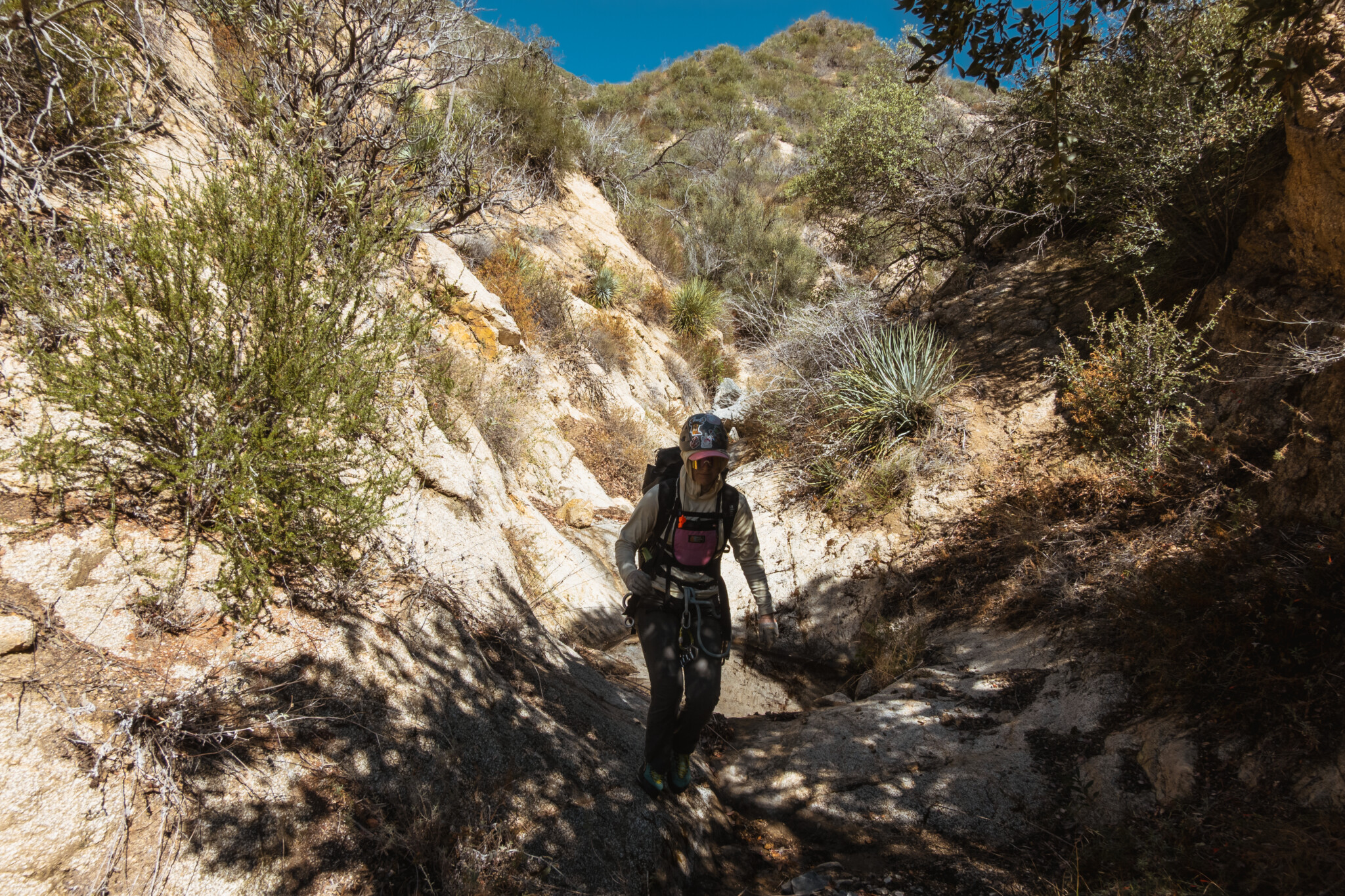
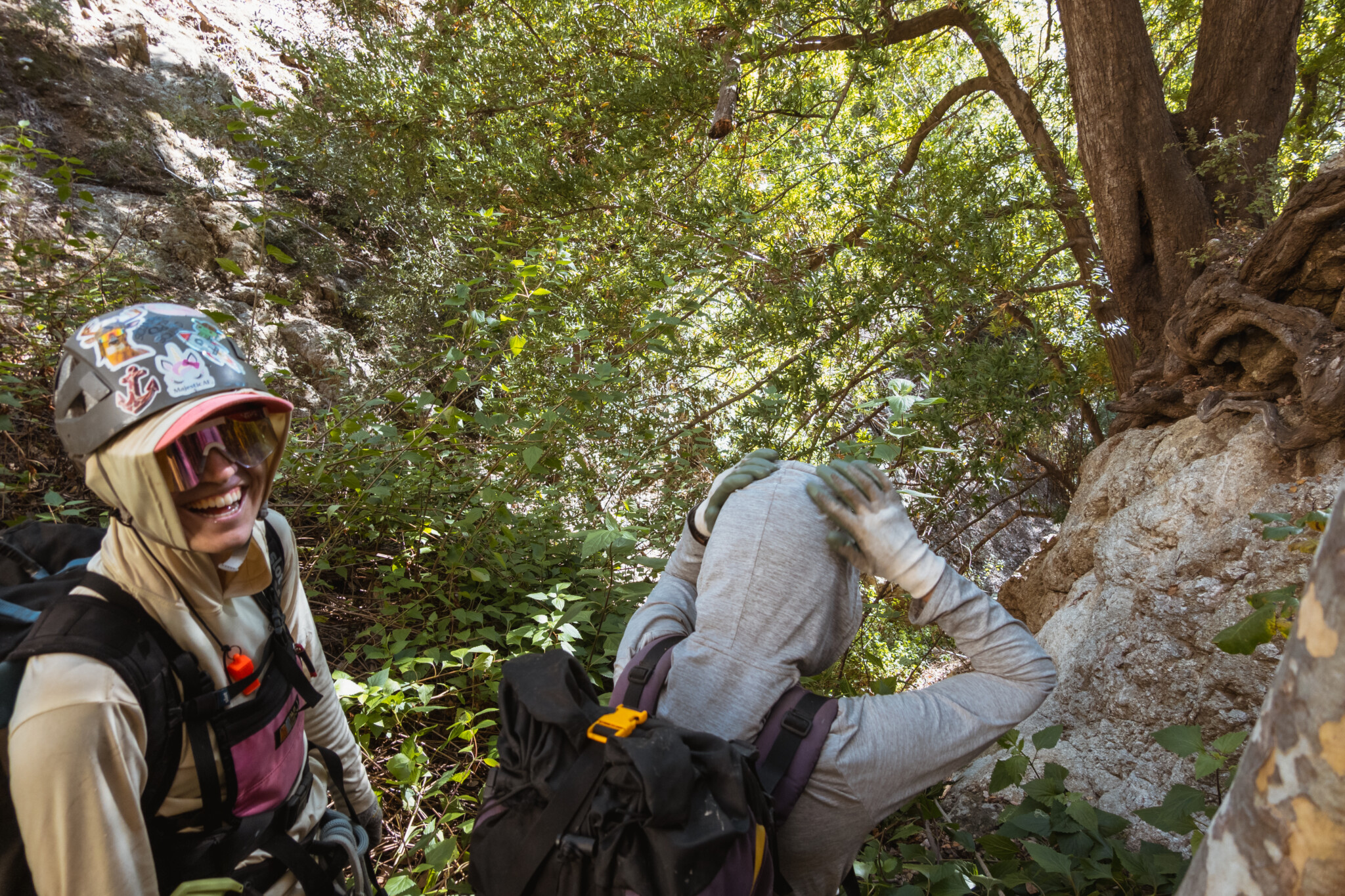
At times, the canyon felt less like descending a watercourse and more like trying to move through an overgrown obstacle course. Branches, vines, yucca, and other vegetation repeatedly blocked progress. Poison oak became an increasing concern farther down.
The water added another complication. Much of it was shallow, but the rocks underneath were slick, and the footing wasn't always visible. A few inches of water could hide an awkward hole or an unexpectedly deep step.
Moving carefully through that combination of slippery rock and dense vegetation consumed an enormous amount of time.

Mile 4.6
The Big Mossy Waterfall
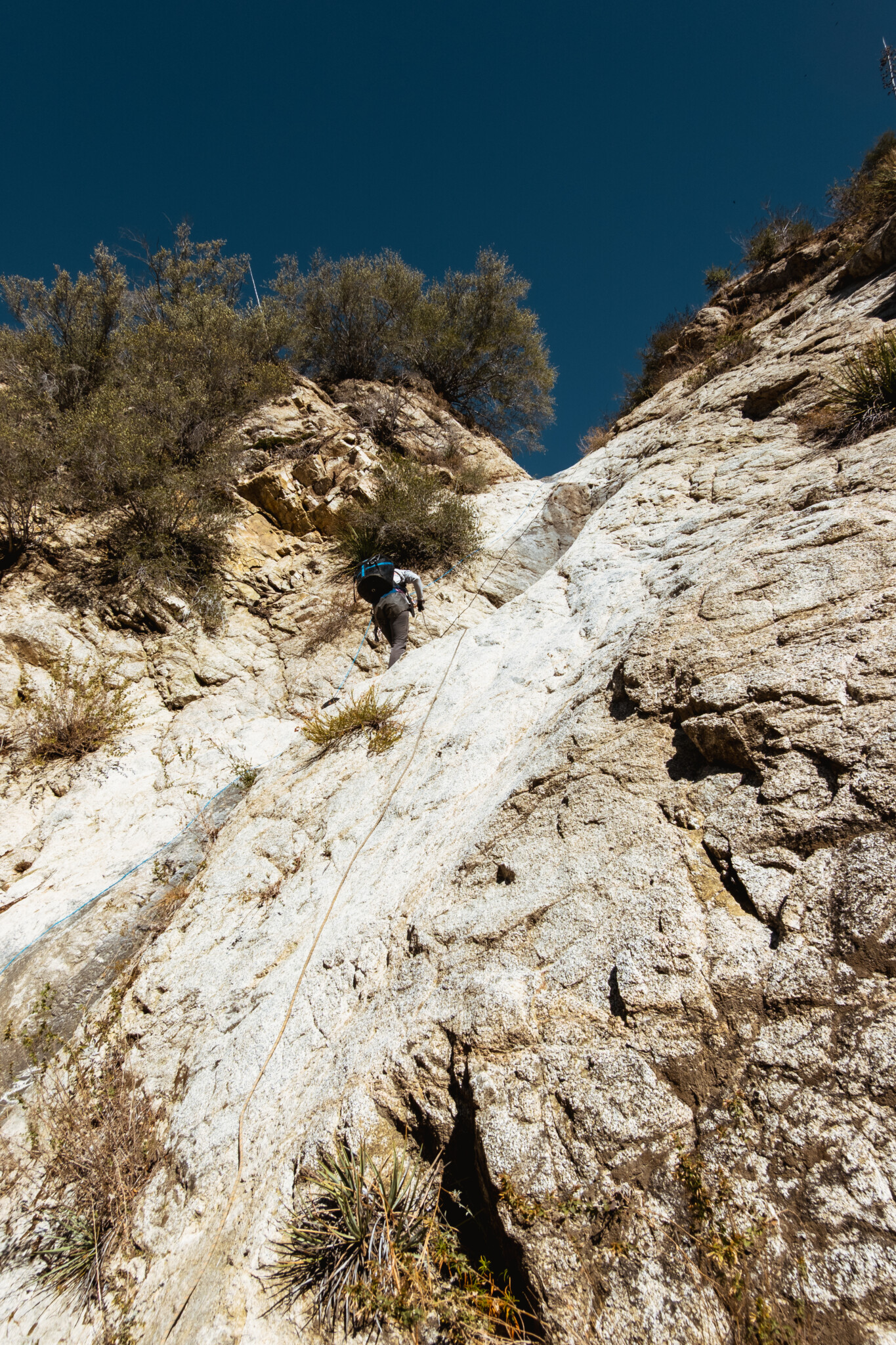
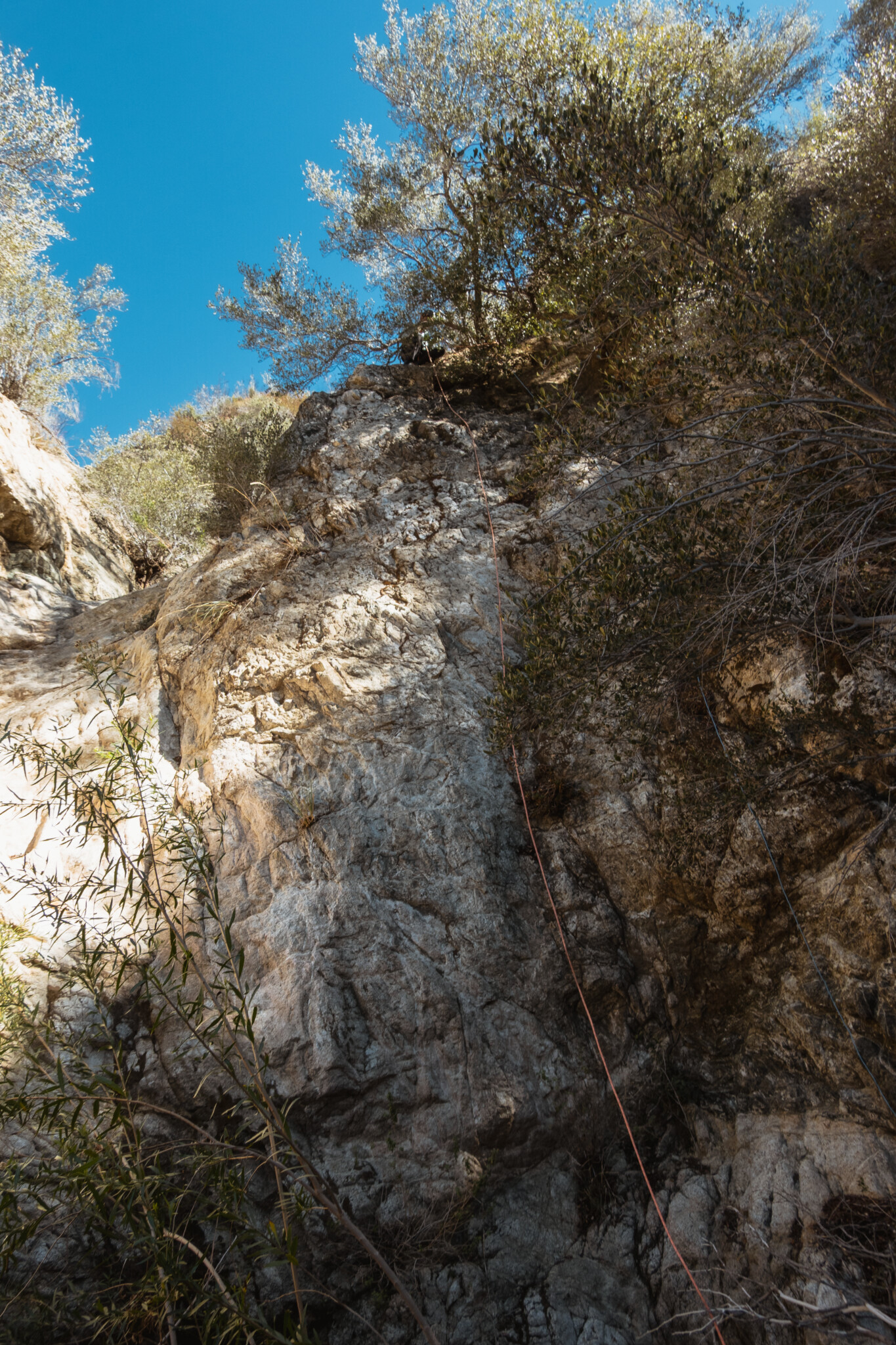
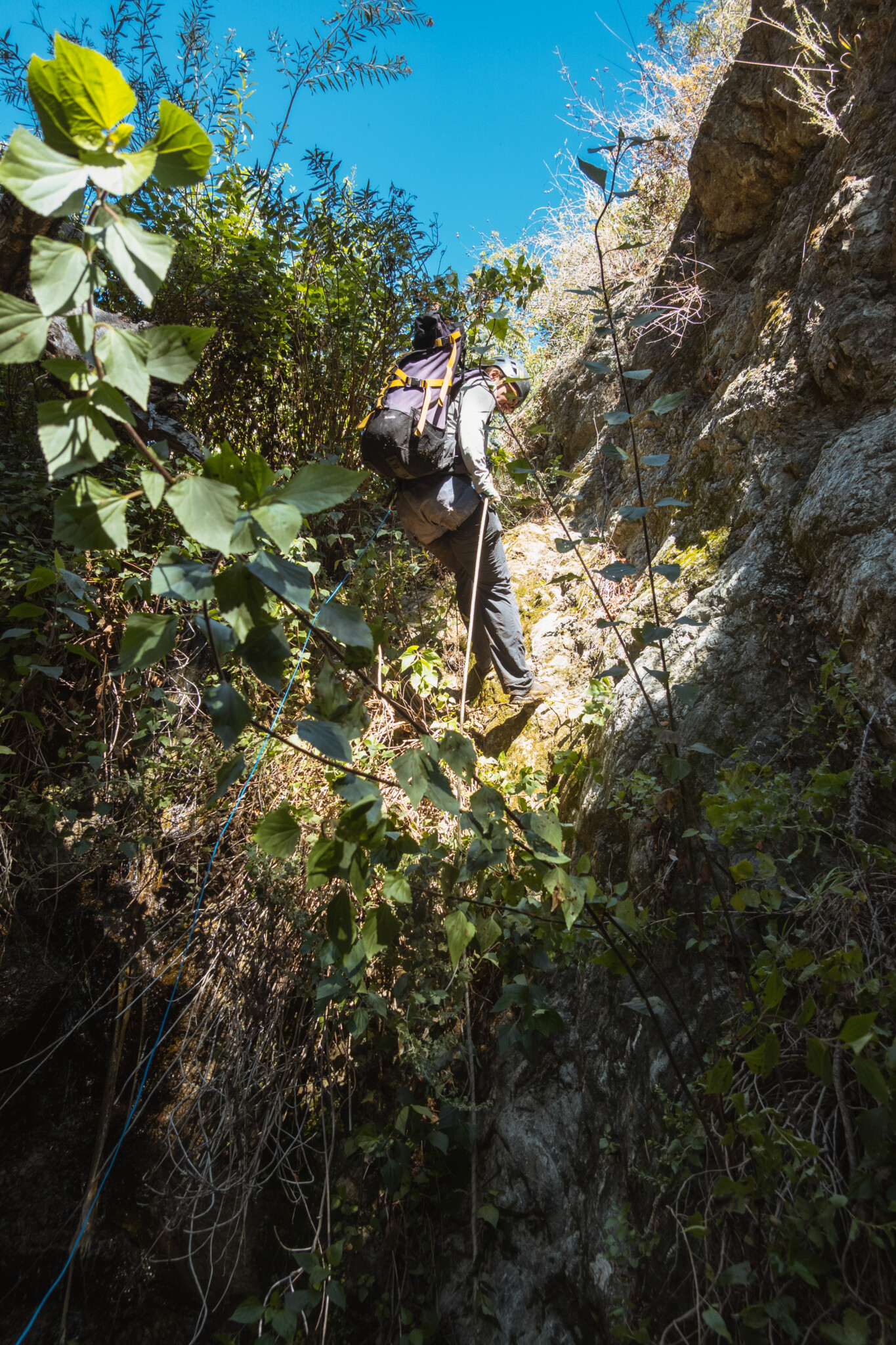
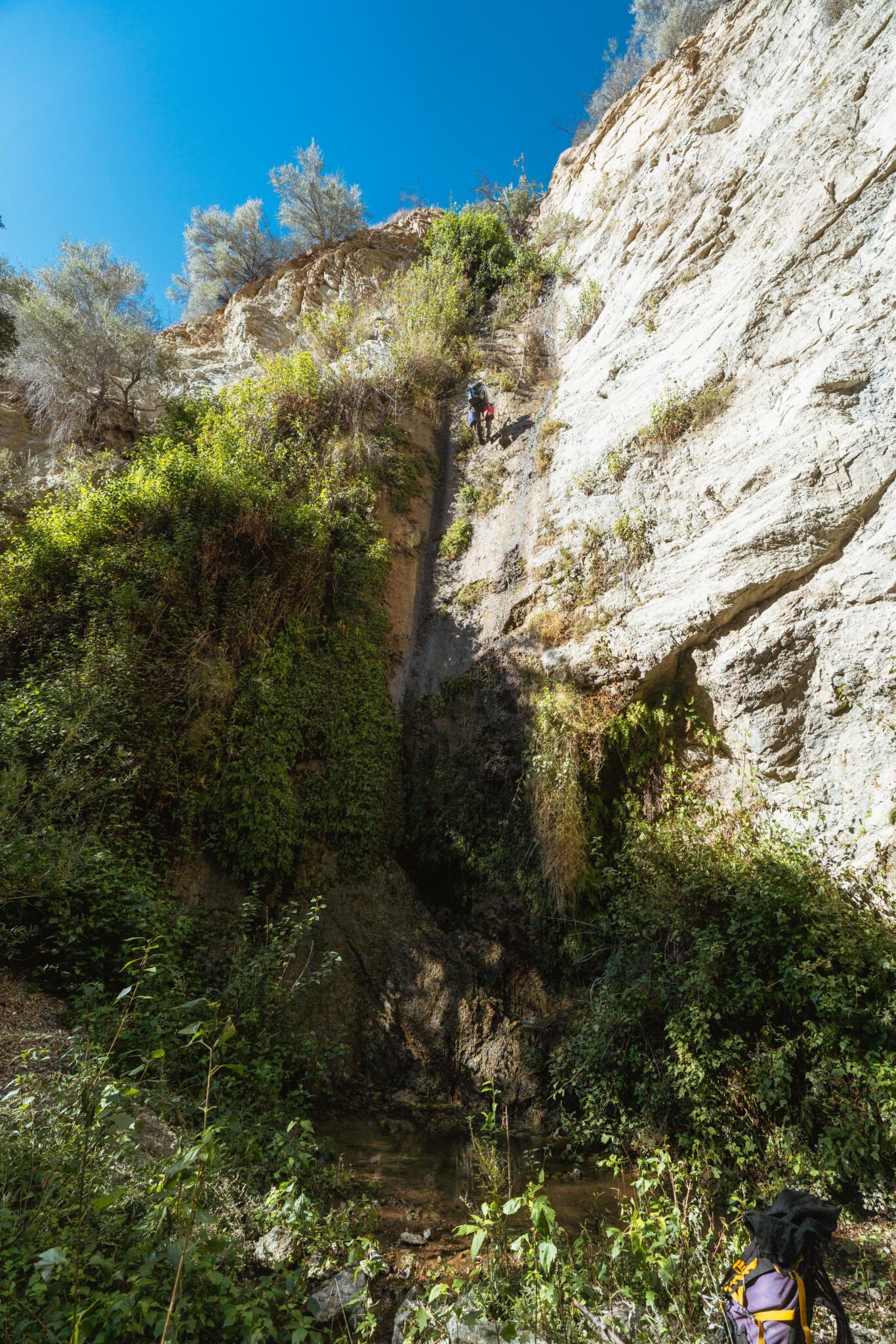
One of the canyon's highlights was a tall, moss-covered waterfall.
It was the kind of feature we'd hoped to find: a striking wall, interesting textures, and a proper rappel in a setting that felt very different from the dry approach.
Unfortunately, reaching the clean rock involved pushing through a substantial section of vegetation near the top.
Once we were on the rappel, the waterfall itself was impressive. The moss and surrounding greenery made it one of the most photogenic places in the canyon.
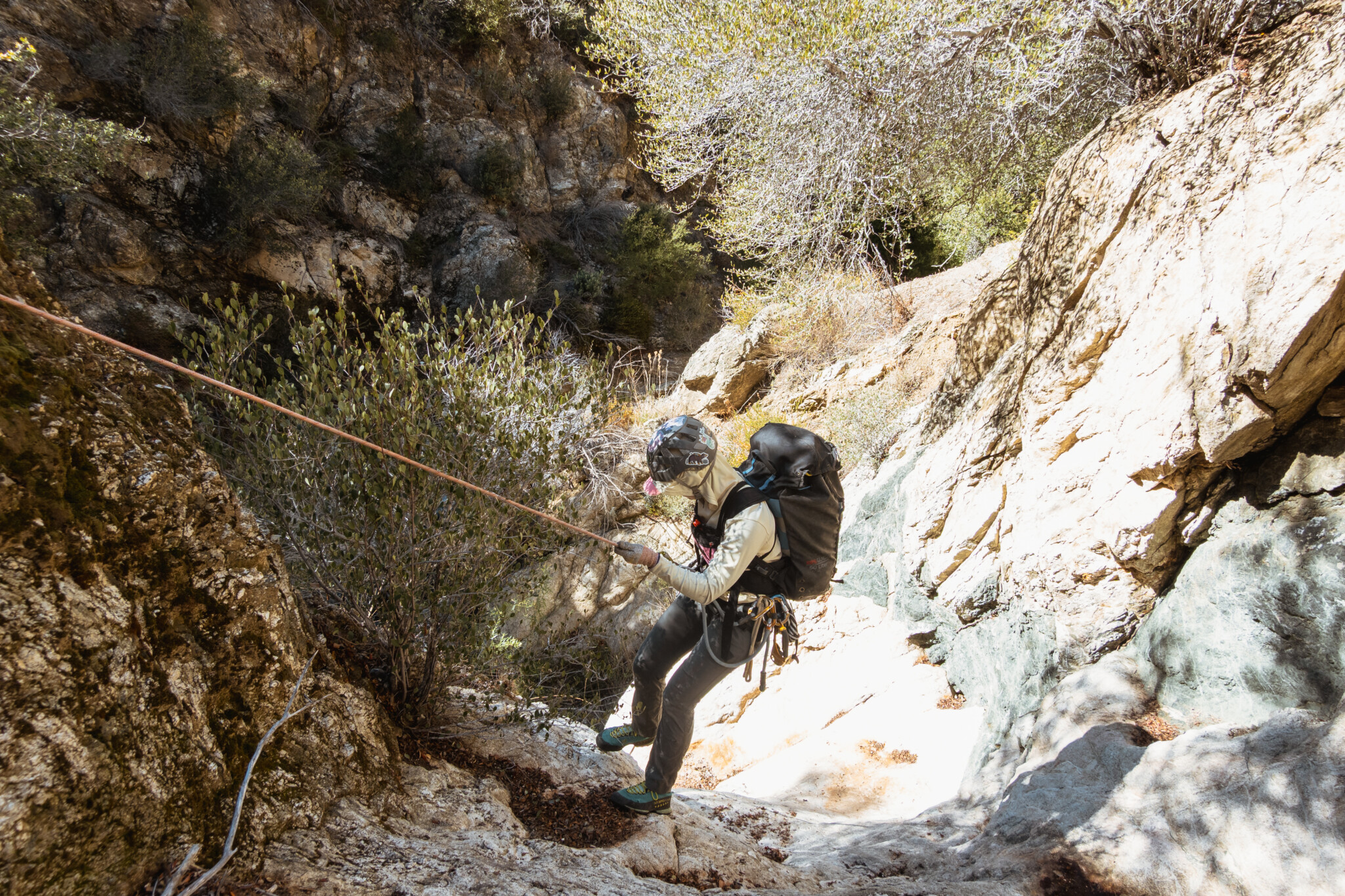
We were conscious of rope retrieval throughout the day. With so much vegetation around the drops, a rope that pulled cleanly in an open canyon could become a problem here. We chose our rigging and retrieval methods with those obstacles in mind.
It was an interesting technical problem, but not one that made me appreciate the brush any more.
Mile 5.1
Field Notes: Anchor Positions and Footing
Two moments stood out as useful reminders about how much the surrounding terrain affects an otherwise familiar technique.
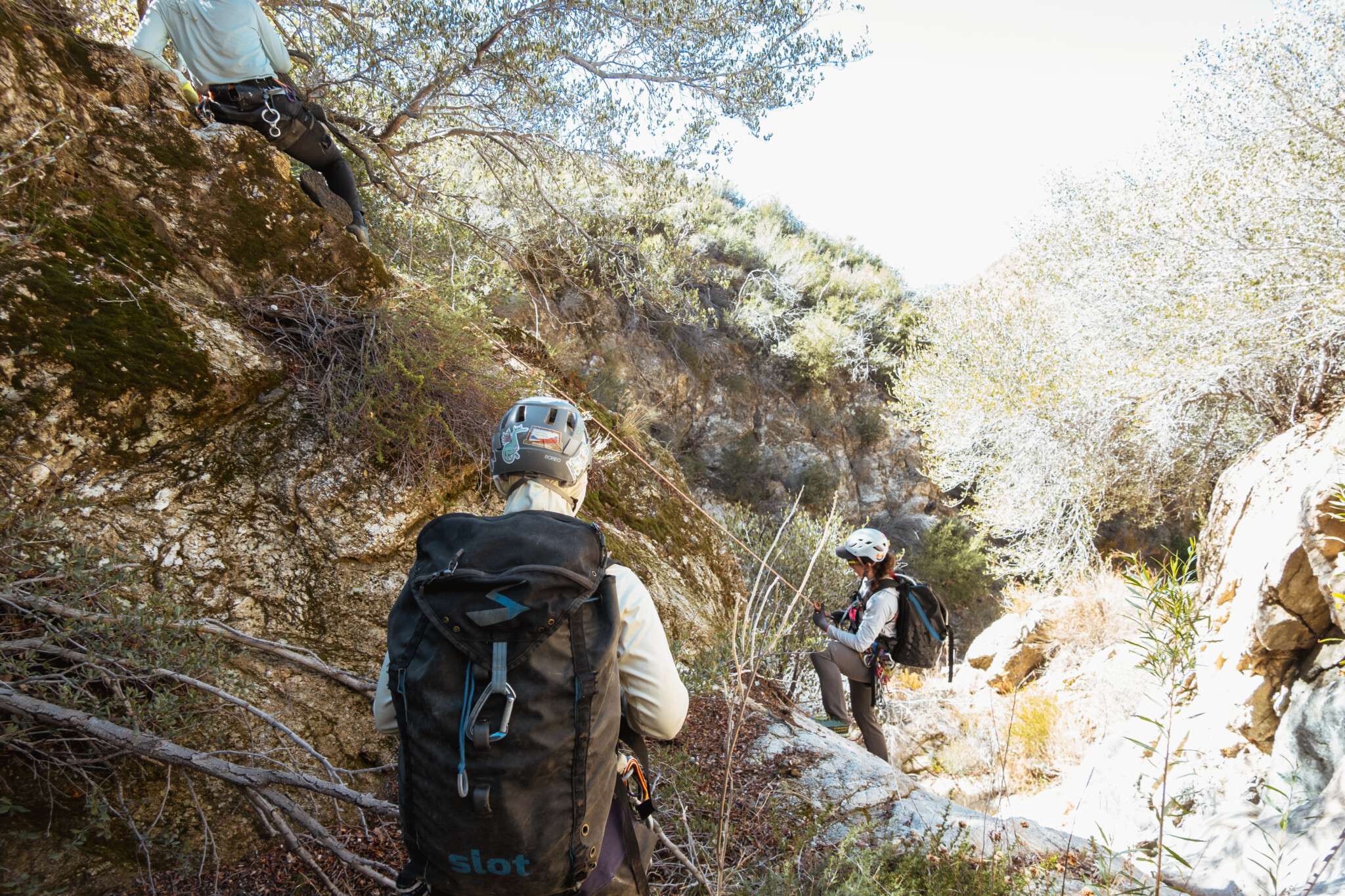
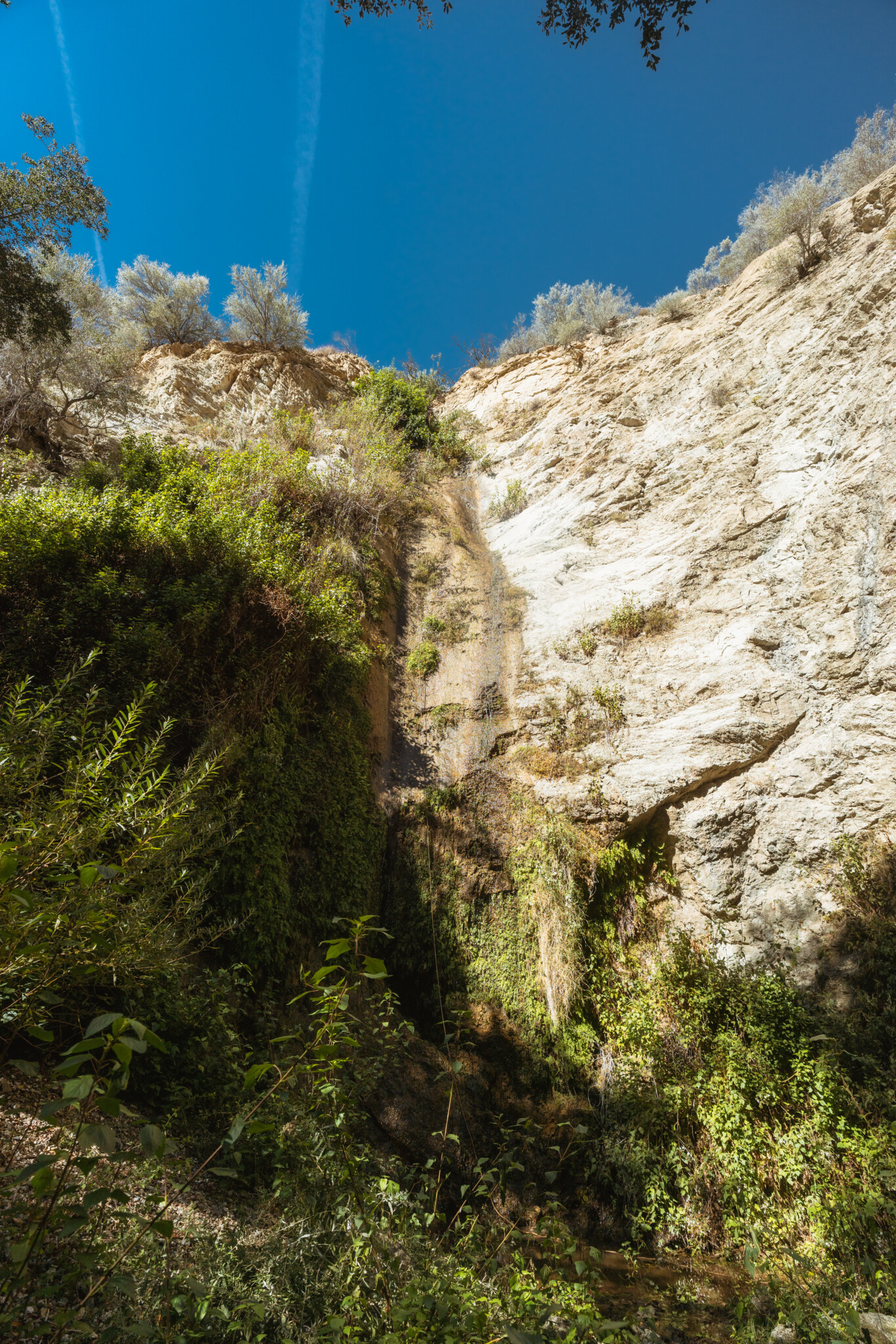
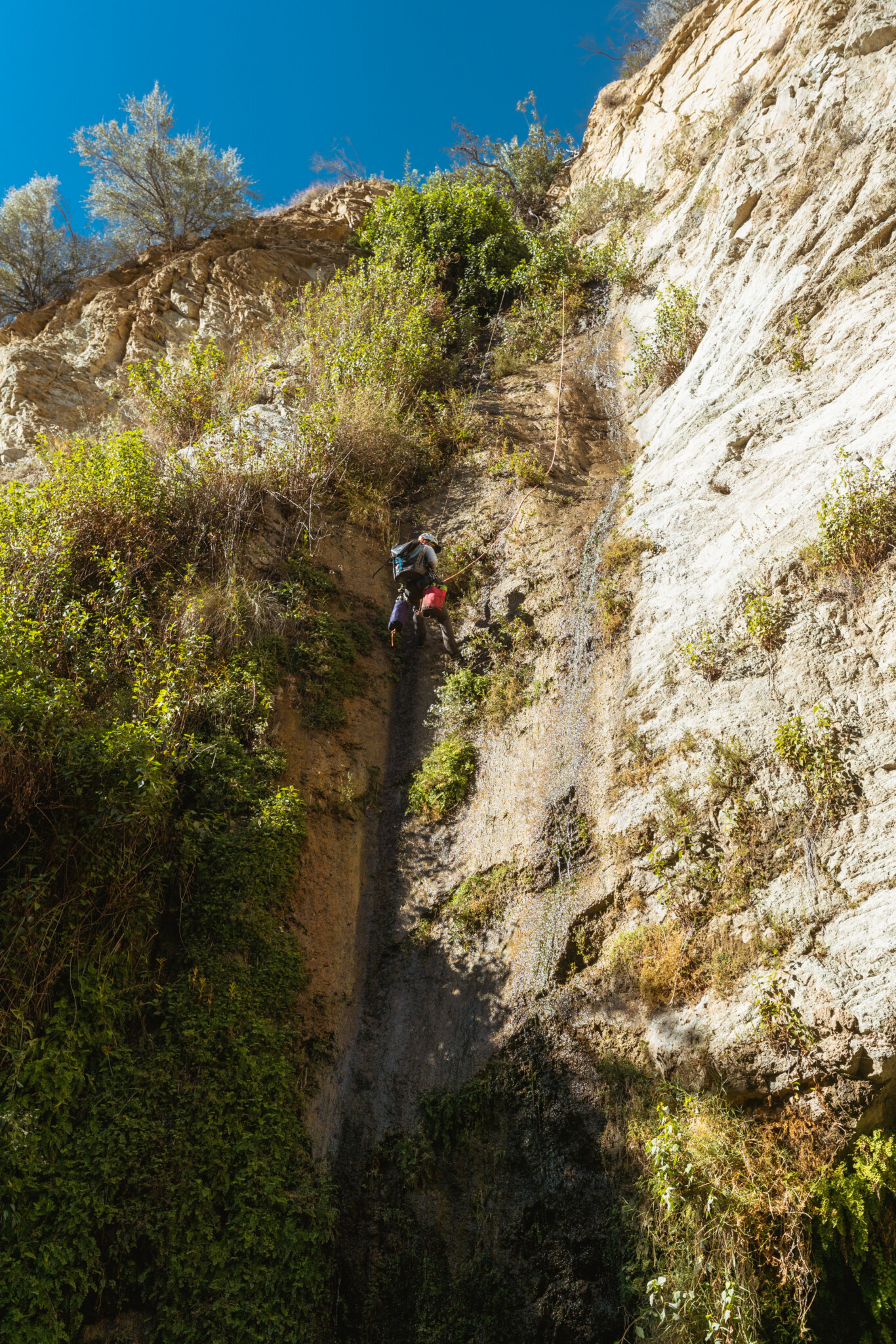
At one drop, I provided a human anchor from a position behind a solid feature. The rope ran across vegetation rather than bare rock, and the resulting load felt different from what I had expected. It reinforced the importance of considering the actual rope path, not just the apparent security of the anchor position.
At another obstacle, someone in our group was providing a human anchor from loose gravel near the water. Her footing shifted, and she slid a short distance into the water. The rappeller was fine, and we continued without injury.
Neither incident was dramatic, but both were worth remembering. Stable footing and predictable rope friction matter, especially when the day is already long and tiring.
These are observations from our trip, not a substitute for training or a recommendation to copy our rigging.
Mile 6.4
Mud, Overhangs, and Strange Vegetation
Farther down, we encountered a muddy, awkward series of drops that involved working around a boulder and negotiating slippery rock.
One section included an overhang that was especially memorable for the roots hanging from the surrounding wall. In the fading light, they looked almost artificial—like something out of The Last of Us.
We started referring to it as the Vecna Vine.
It was an odd little moment of humor in a canyon that was becoming increasingly serious about taking up the rest of our day.
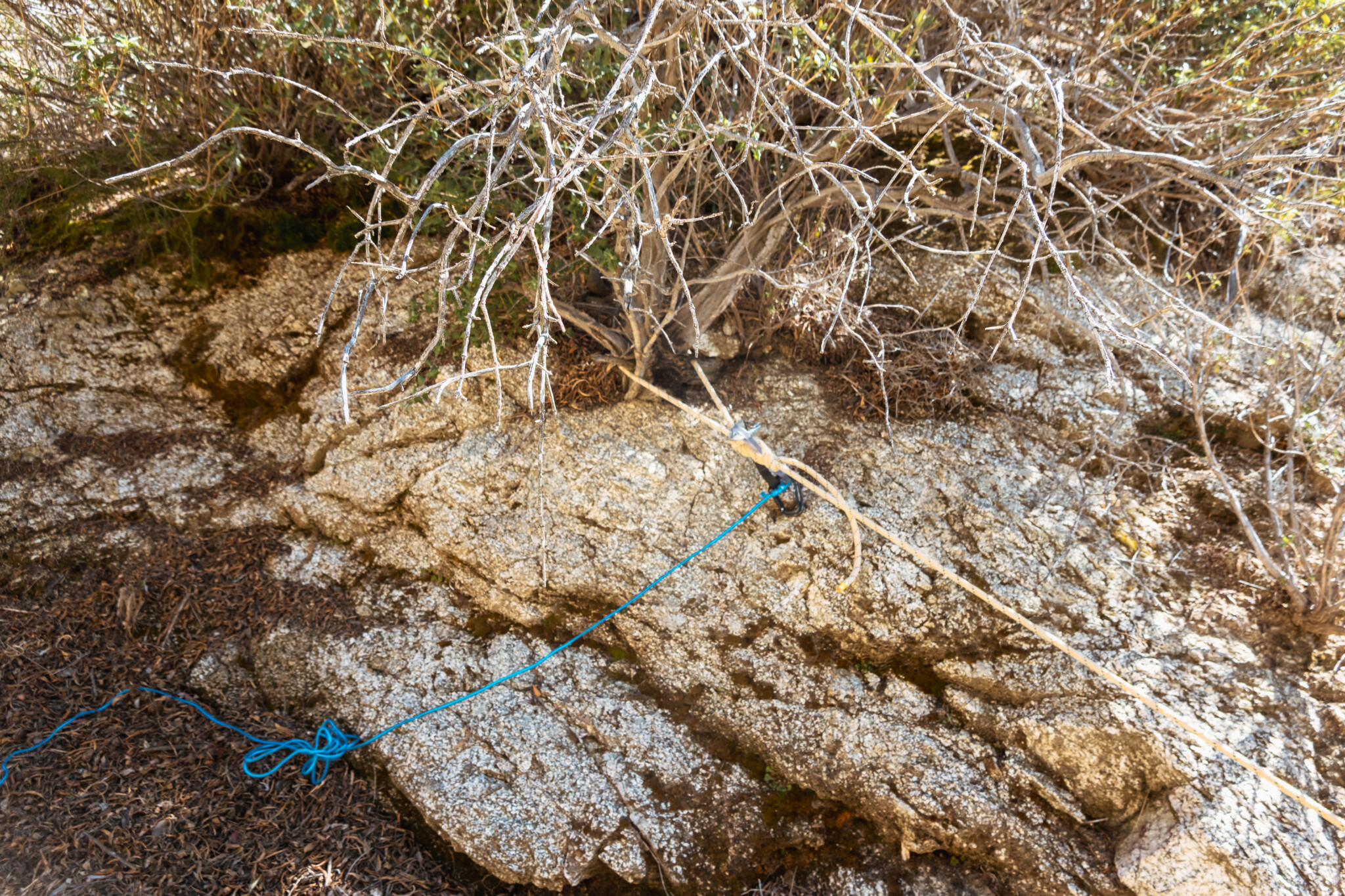
We also found a bolted anchor with aging white webbing. We replaced the webbing before continuing. It was a welcome change from some of the anchor decisions we'd been making elsewhere.
Mile 7.2
When Daylight Started Running Out
As the afternoon wore on, we became increasingly aware that we were moving more slowly than anticipated.
We'd seen reports suggesting substantially shorter times for the canyon. Those times clearly weren't going to apply to our group on this day.
We considered whether we could exit the drainage early. On the map, one possible route looked promising. On the ground, the adjacent terrain told a different story.
A drainage that seemed manageable in a simplified topographic view turned out to be a much more substantial obstacle. Shaded relief would have helped us interpret it better.
We continued down the canyon.
As daylight faded, photography became less of a priority. Early in the day, I'd been stopping regularly to document the scenery. Later, the goal was simply to keep everyone moving safely.
We also had to manage a couple of gear complications. One person had forgotten a helmet, and we coordinated how to keep helmets available where rockfall exposure mattered. Lindsay had forgotten her headlamp, so we made use of the lights we did have, including the flashlight on my Garmin watch.
None of that made the day easier.
Mile 8.0
The Exit
We eventually reached the lower canyon and passed beneath a pipe near the exit.
The dirt road wasn't far away in a straight line, but getting to it was another matter. Following the more obvious road network would have meant a substantial detour around private property.
Instead, we worked our way up steep, brushy animal trails toward the road.
By then, it was fully dark.
After everything we'd already done, that final climb felt like an especially unnecessary bonus round.
We finally reached the car at about 8:04 p.m. My headlamp gave out right around the time we arrived, which seemed fitting.
We'd been moving for roughly twelve and a half hours.
A Few Things Worth Remembering
Indian Springs does have interesting features. The mossy waterfall is beautiful. There are unusual little potholes, unexpected vegetation, and some worthwhile rappels.
But those highlights are separated by a lot of difficult travel.
The vegetation wasn't an occasional inconvenience; it defined the experience. Poison oak, yucca, slippery water, loose footing, and awkward route-finding all compounded the effort.
We also recovered two Mylar balloons—one during the descent and another near the exit. It's always disappointing to find that kind of trash in a remote place, although at least we could carry them out.
The poison oak followed some of us home.
Would I Go Back?
Probably not.
That isn't a criticism of the people who documented the route or the friends who joined us. We had a capable, cooperative group, and everyone contributed to getting through a complicated day.
I'm glad we experienced the canyon together. There were some genuinely beautiful moments, and it gave us plenty to talk about afterward.
But if I were choosing another canyon for a day out with Lindsay and friends, I'd pick something with a little less vegetation and a little more time to enjoy the scenery.
Indian Springs was an adventure.
Once was enough.
Beta
- Trip
- Indian Springs Canyon, San Gabriel Mountains
- Group
- Five
- Duration
- Approximately 12.5 hours, finishing by headlamp
- Rappels
- Approximately 14 observed; prior beta suggested 10–12
- Approach
- Loose footing, yucca and substantial bushwhacking near the ridgeline
- Descent
- Dense brush, shallow flowing water, muddy slick waterfalls and small potholes
- Major rappel
- Approximately 130–140 ft, unverified against technical beta
- Risk notes
- Rockfall, route-finding and difficult anchor retrieval
Photos












Contents
Show on page
Comments (0)